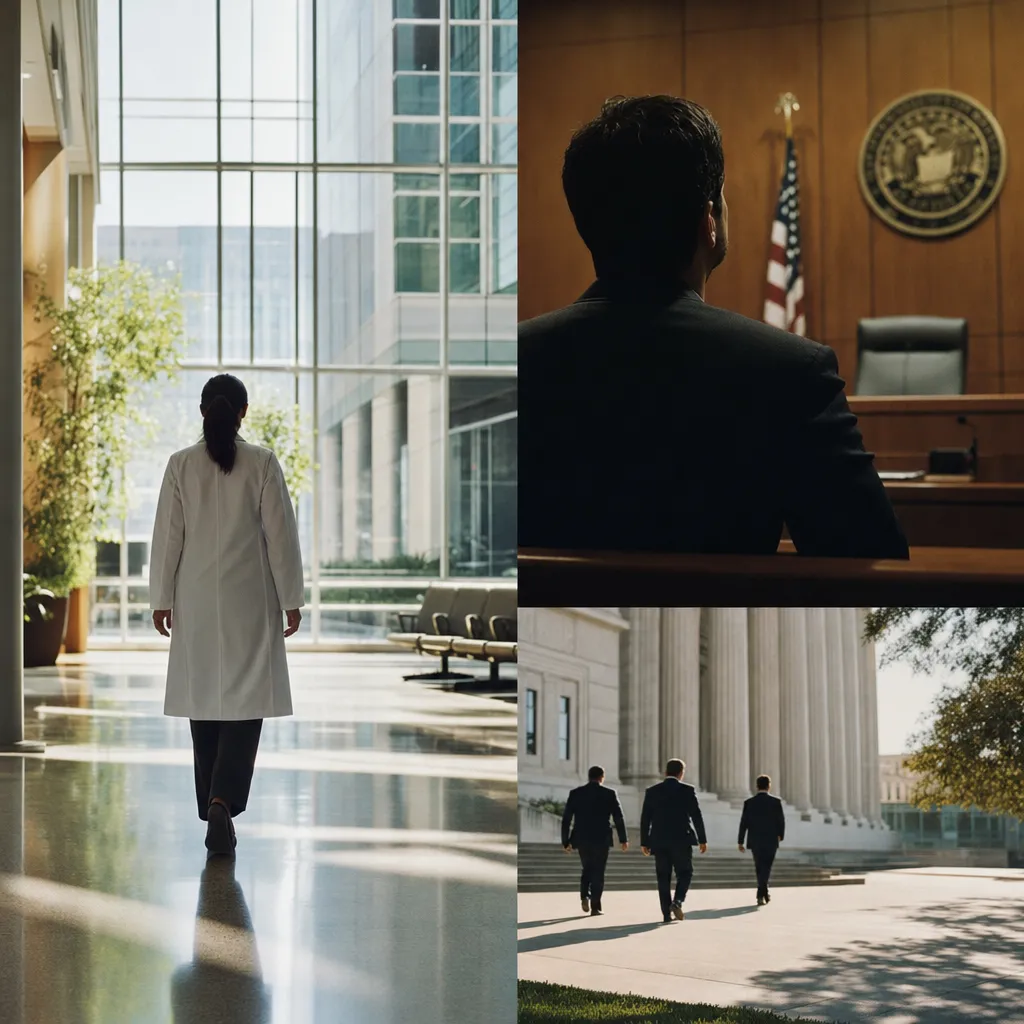
The New York State Bar Association adopted formal AI ethics guidelines requiring attorneys to disclose AI-driven billing efficiencies, protect client confidentiality when using AI tools, and follow court disclosure rules — the most comprehensive state bar AI standards yet.
New York Bar Formalizes AI Ethics Rules on Billing, Confidentiality, and Court Filings
By Hector Herrera | November 7, 2026 | Legal
The New York State Bar Association has adopted comprehensive AI ethics guidelines that apply existing professional conduct obligations directly to how attorneys use generative AI — covering billing practices, client confidentiality when inputting data into AI tools, and when lawyers must disclose AI assistance in court filings. New York now joins a growing roster of state bars formalizing AI governance as hallucinated citations, undisclosed AI use, and attorney-generated errors continue to draw judicial sanctions across the country.
The guidelines stop short of banning AI use. They are designed to enable responsible adoption while giving attorneys clear standards — and malpractice exposure lines — for the most high-risk AI applications in legal practice.
What the Guidelines Cover
According to FindLaw's coverage of the guidelines, the NYSBA rules address three core areas:
Billing
Attorneys may not bill clients at standard rates for time saved by AI tools without disclosure. The guidelines clarify that if an AI tool reduces a task from four hours to 45 minutes, billing the full four hours without disclosure constitutes a misrepresentation. Attorneys who use AI for research, drafting, or document review must either disclose time savings and bill accordingly, or disclose their billing approach to clients in advance engagement letters.
The billing guidance closes a gap that had been generating quiet controversy in large firm practice: some firms had been billing AI-assisted work at full associate rates while capturing the efficiency as margin, without informing clients. The NYSBA ruling makes clear this practice is ethically impermissible without affirmative disclosure.
Client Confidentiality
Attorneys have an existing obligation to protect client information. The guidelines apply this obligation specifically to AI tool inputs: feeding privileged case information, client identification data, or confidential strategy into consumer-facing AI tools — including general-purpose LLM tools not configured for law firm security standards — may violate professional conduct rules.
Get this in your inbox.
Daily AI intelligence. Free. No spam.
The guidelines require attorneys to understand the data retention and training policies of any AI tool they use with client information. Using a tool that retains user inputs for model training, without client consent to that use, creates a confidentiality exposure. Law firms are advised to use enterprise AI tools with explicit no-retention contractual agreements or to implement information filtering before AI submission.
Court Disclosure
The guidelines address when AI use in court filings requires disclosure to opposing counsel or the court. The position adopted by NYSBA is that AI-generated content in filed documents requires the same verification obligations as attorney-drafted content — but that judges may require specific disclosure when AI was used to generate arguments, case summaries, or legal research. Attorneys should check local court rules, which vary significantly across New York's federal and state jurisdictions.
The Context: Why Now
The NYSBA guidelines arrive as AI-related attorney sanctions have become a regular feature of legal news. As covered previously, courts in multiple jurisdictions have issued six-figure sanctions against attorneys who submitted AI-generated briefs containing fabricated citations without verification. Several attorneys have faced disciplinary proceedings.
The cases that precipitated the most attention — briefs citing nonexistent court opinions that attorneys apparently submitted without checking — have been driving demand for formal guidance. Bar associations that issued informal guidance in 2024 and 2025 are now converting those guidelines into formal ethics opinions with clear professional conduct rule citations, creating enforceable standards.
New York's approach is consistent with a wave of state-level legal AI governance now spanning more than 21 jurisdictions, though the specific rules vary significantly. Some states require proactive disclosure; others only prohibit undisclosed AI use in certain filing types.
What This Means for Law Firms
The billing guidance is likely to have the most immediate operational impact. Law firms with time-and-billing practices that have not been updated for AI use face exposure from client complaints that could now be framed as ethics violations, not just billing disputes. Revising engagement letters, updating billing practice guidelines, and training billing partners on the disclosure requirements should be treated as near-term compliance priorities.
For litigation practice specifically, the court disclosure guidance requires attorneys to know their local rules. New York's federal districts and state courts are applying different standards, and the NYSBA guidelines create a floor but not a ceiling. Attorneys who practice across multiple jurisdictions need to track the highest applicable standard.
The confidentiality guidance affects any attorney who uses commercial AI tools without reviewing data policies. Many attorneys have been using general-purpose tools — ChatGPT, Claude, Gemini — for research and drafting. The guidelines do not prohibit this, but they require attorneys to understand what happens to the data they input. Using enterprise versions with appropriate data agreements satisfies the obligation; using consumer versions with client information does not.
What to Watch
Watch for the guidelines to generate a secondary wave of bar association action nationally. When New York — the country's largest bar association by membership — formalizes standards, other state bars typically follow within 12-18 months. Also watch for the billing guidance to generate client-side pushback from large corporate clients, who may demand proactive disclosure of all AI use and fee adjustments. This is already a standard contract provision in some large company legal procurement — the NYSBA ruling gives that ask formal ethical backing.
Source: FindLaw, November 2026
Did this help you understand AI better?
Your feedback helps us write more useful content.
Get tomorrow's AI briefing
Join readers who start their day with NexChron. Free, daily, no spam.