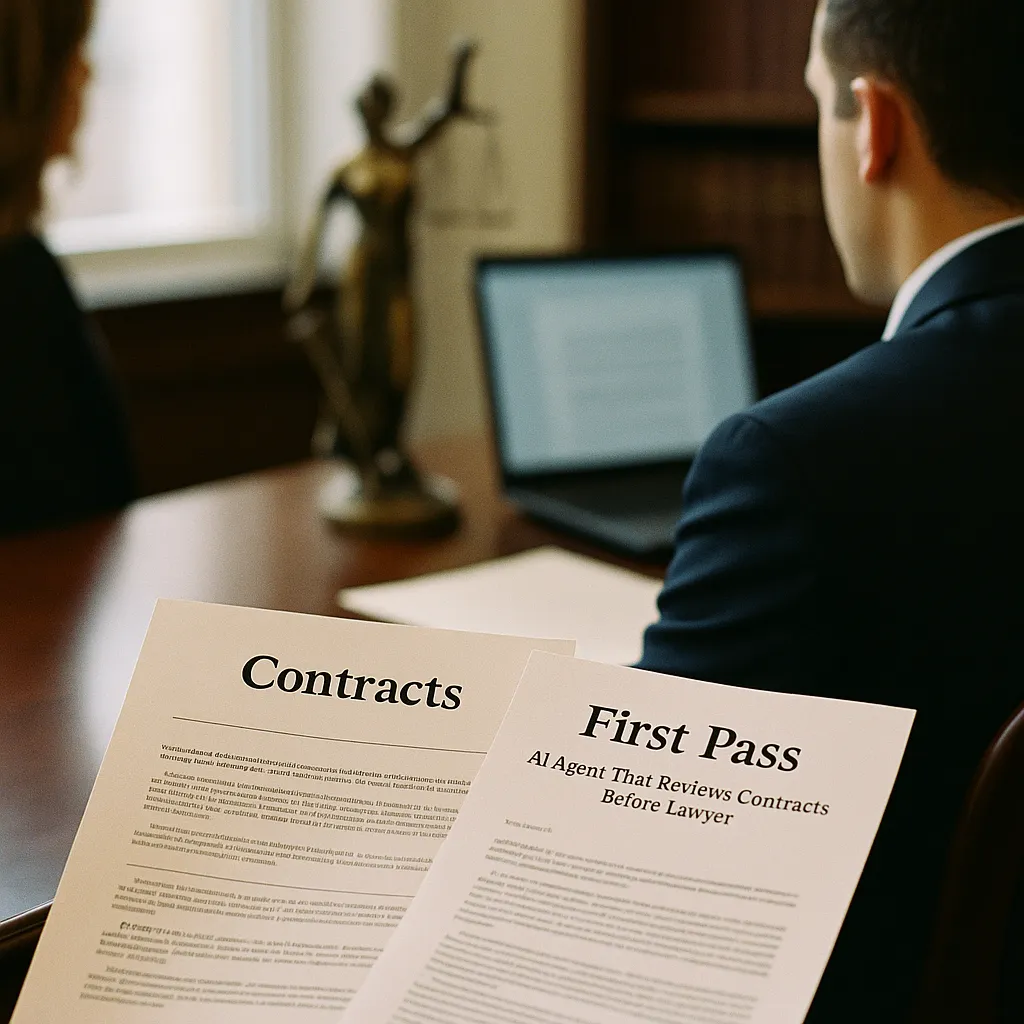
AI hallucination incidents in legal filings are now documented at four to five new cases per day — and courts are considering mandating hyperlinked citations to catch fabricated sources at time of filing.
AI Hallucination Cases in Court Filings Now Arriving at 4 to 5 Per Day
By Hector Herrera | May 5, 2026 | Legal
Documented AI hallucination incidents in legal filings are now arriving at four to five new cases per day, according to a Corporate Compliance Insights report on AI risk for general counsel in 2026. Courts are responding by considering a structural reform that would fundamentally alter litigation practice: mandating hyperlinked citations in pleadings so judges and opposing counsel can verify sources in real time.
The pace — roughly 1,500 documented incidents per year, and accelerating — reflects a simple arithmetic reality: AI-assisted legal work is scaling rapidly, and the error rate hasn't been eliminated. When AI generates a citation to a case that doesn't exist, or mischaracterizes the holding of a real case, and a lawyer files that citation without verification, the resulting hallucination becomes a court record.
What Hallucinations in Legal Filings Actually Look Like
An AI hallucination (a term for when an AI system generates plausible-sounding but factually wrong output) in a legal context typically takes one of three forms:
-
Fabricated citations — The AI generates a case name, volume, and page number that doesn't correspond to any real case. The citation looks authentic. Lawyers who don't verify it find out in court.
-
Real cases, wrong holdings — The AI cites an actual case but misstates what the court decided. The case exists; the legal principle attributed to it does not.
-
Jurisdiction errors — The AI cites a case from the wrong jurisdiction or time period, presenting persuasive authority where binding authority doesn't exist.
The Mata v. Avianca case in 2023 was the first high-profile example to reach public attention — a New York attorney submitted AI-generated citations to cases that didn't exist and was sanctioned by the court. Since then, documented incidents have grown from isolated curiosities to a daily occurrence in courts nationwide.
Why the Rate Is Accelerating
The four-to-five-per-day rate in early 2026 reflects two simultaneous trends: the volume of AI-assisted legal work is increasing fast, and verification habits among practitioners are lagging adoption.
Get this in your inbox.
Daily AI intelligence. Free. No spam.
AI legal tools have become mainstream. Products like Harvey, CoCounsel (Thomson Reuters), and Lexis+ AI are now standard tools at mid-size to large law firms. Many smaller firms are using general-purpose tools like Claude or GPT-4 for drafting. The tools are genuinely useful for research summarization, brief drafting, and motion preparation. The speed advantage is real — tasks that took hours can be done in minutes.
Verification hasn't kept pace. The core problem is workflow: using AI to draft a brief, then manually verifying every citation against the original source, takes nearly as long as researching without AI assistance. Lawyers facing deadline pressure are making probabilistic bets that the citations are real. When the AI is right 95% of the time, those bets mostly work. When they fail, the consequences include sanctions, case dismissal, bar complaints, and malpractice exposure.
The sanctions regime is tightening. Early AI hallucination cases resulted in judicial scolding without meaningful sanction. Courts have moved progressively toward substantive penalties: fines, adverse inferences, case-terminating sanctions in the most egregious cases. That progression hasn't deterred use as much as it has intensified verification pressure on the firms that take it seriously — which creates a competitive disadvantage: the careful firms spend more time checking, the careless firms file faster.
The Proposed Reform: Hyperlinked Citations
The most structurally significant response courts are considering is requiring hyperlinked citations in pleadings. The concept: every case citation in a court filing would include a working hyperlink to the actual case in a verified legal database (Westlaw, Lexis, or public court records). A court clerk, judge, or opposing counsel could click the citation at time of filing and confirm the case exists and says what the filing claims.
This reform would:
- Surface fabricated citations immediately — a dead link or a link to a different case reveals the problem before the document enters the adversarial process
- Create a verification accountability record — the act of inserting a working hyperlink demonstrates at least minimal verification by the filing attorney
- Shift AI hallucination consequences upstream — rather than discovering errors during oral argument or after judicial reliance, the error surfaces at filing
The challenge is implementation. Federal courts operate under Rules of Civil Procedure that don't currently contemplate hyperlinked citations as a requirement. State courts have different electronic filing systems. The infrastructure for verified, stable hyperlinks to case law — links that won't break when databases update their URL structures — doesn't uniformly exist.
Several district courts have issued standing orders requiring attorneys to certify AI-assisted research. Hyperlinked citations would be a more enforceable version of the same accountability.
What Law Firms Need to Do Now
The practical advice from legal risk management professionals is consistent:
- Mandatory verification protocol — Every citation in every filing must be checked against the primary source before submission. This is not optional given current sanction exposure.
- AI tool disclosure policy — Develop a firm-level policy on when and how AI tools are used in legal work, consistent with evolving court requirements and state bar guidance
- Client disclosure — Whether to inform clients when AI tools were used in their matters is an evolving ethics question; several state bars have issued preliminary guidance that errs toward disclosure
- Malpractice coverage review — Legal malpractice insurers are beginning to ask about AI tool usage in coverage applications; firms should confirm their coverage applies to AI-related errors
What to Watch
Two near-term developments will shape the hallucination problem's trajectory:
-
Judicial Conference action — The U.S. Judicial Conference, which oversees federal court practice, is expected to issue guidance on AI use in federal court filings before end of 2026. If it includes a hyperlinked citation pilot or a mandatory AI disclosure requirement, it will immediately reshape practice in all federal courts.
-
State bar ethics opinions — Several states have ethics opinions on AI and legal practice pending. California, New York, and Texas are the jurisdictions to watch; their ethics guidance typically propagates nationally.
The four-to-five-per-day rate is a warning sign, not a ceiling. As AI-assisted legal work scales, the absolute number of hallucination incidents will rise even if the error rate per filing declines. The legal profession's response in the next eighteen months will determine whether AI hallucination becomes a manageable quality-control problem or a structural integrity crisis for court filings.
Source: Corporate Compliance Insights — AI Risk 2026: Critical Changes for General Counsel
Did this help you understand AI better?
Your feedback helps us write more useful content.
Get tomorrow's AI briefing
Join readers who start their day with NexChron. Free, daily, no spam.