Home Assistant's April 2026 release extends smart home control to the vast installed base of infrared devices — TVs, air conditioners, fans — without third-party bridges, while making its AI assistant's reasoning transparent before it acts.
Home Assistant 2026.4 Adds Native Infrared Support and Visible AI Reasoning for Voice Assistant
By Hector Herrera | April 21, 2026
Home Assistant released version 2026.4 with two capabilities that address two persistent friction points in smart home adoption: the millions of legacy devices that can't connect without additional hardware, and the opacity of AI voice assistants that act before you know what they understood. The release was announced on the official Home Assistant blog and is available for all installation types.
Native Infrared Support: The Legacy Device Problem
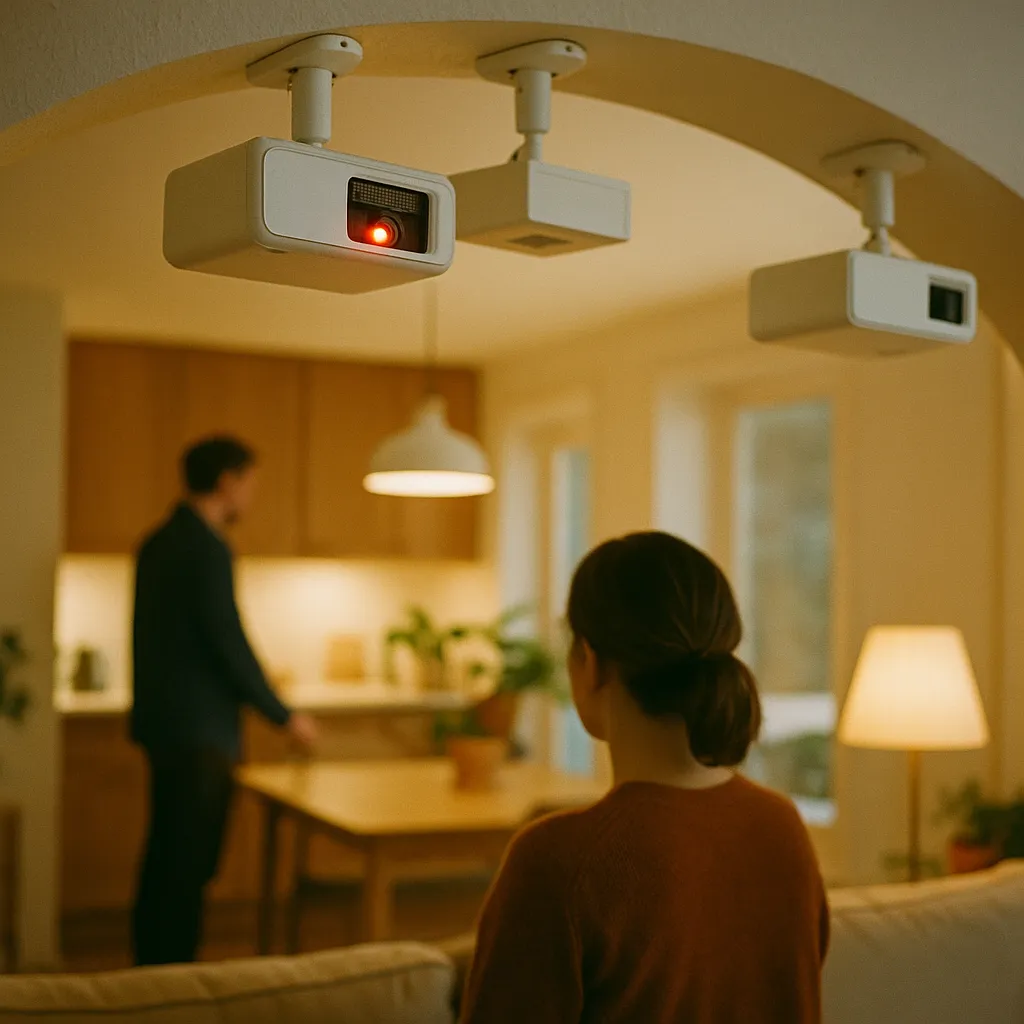
The majority of electronics in American homes are not "smart." They operate via infrared (IR) remote signals — TVs, air conditioners, ceiling fans, AV receivers, projectors, and hundreds of other products use IR as their standard control method.
Getting these devices into a smart home system has previously required a third-party IR blaster — a separate piece of hardware that translates smart home commands into IR signals. Products like Broadlink and Logitech Harmony have filled this gap, but each adds cost, a separate app, an additional failure point, and often a cloud dependency that undermines the local-control value proposition of Home Assistant in the first place.
Version 2026.4 eliminates that dependency. Native IR support integrates infrared control directly into the platform:
- Connect a compatible IR blaster without a third-party bridge or app
- Control IR devices through standard Home Assistant automations and dashboards
- Use Assist voice commands on IR devices alongside everything else in your home
- No external account, no cloud relay, no third-party maintenance dependency
For anyone who has tried and abandoned smart home setups because the TV or air conditioner wouldn't participate, this removes a structural barrier that has existed since smart home systems began.
Get this in your inbox.
Daily AI intelligence. Free. No spam.
Visible AI Reasoning: Knowing What Assist Is About to Do
The second major addition addresses a different problem: trust.
Home Assistant's Assist voice assistant can control devices, run automations, and execute multi-step tasks using an AI model. The recurring problem with AI-powered voice control has been opacity: you give a command, the AI does something, and you don't know what it understood until after it has already acted — which, if it interpreted incorrectly, means you're now debugging rather than controlling.
2026.4 adds visible AI reasoning — showing users what Assist is interpreting and planning before it executes. Give a voice command, and Assist shows its planned action before running it. You see what it understood. You can catch misunderstandings before they become problems.
This matters more than it might seem. The trust barrier for handing more control to an AI assistant has two components: capability (can it do what I want?) and predictability (will I know what it's going to do?). Better models have steadily improved the capability side. Visible reasoning directly addresses predictability — and predictability is what separates a voice assistant people actually rely on from one they use occasionally and distrust.
Cross-Domain Automation Improvements
Beyond the two headline features, 2026.4 includes improvements to cross-domain automation — making it easier to build automations that span multiple device types, locations, and trigger conditions. Full release notes are available for users building complex automation stacks.
Why This Release Matters Beyond Home Assistant Users
Home Assistant is the dominant open-source home automation platform. It runs locally — your data doesn't leave your home — distinguishing it from cloud-dependent alternatives like Amazon Alexa or Google Home. Its active development community and local-control architecture make it the technical benchmark for serious smart home builds.
The 2026.4 release matters as a direction signal for the broader ecosystem: toward local AI inference, transparent AI reasoning, and native support for the legacy device categories that cloud platforms have largely ignored. The addressable market for smart home technology expands significantly when IR devices — which represent the majority of installed consumer electronics — become first-class participants without third-party bridges.
What to Watch
Whether major TV and air conditioning manufacturers respond to native IR support by developing proper local API integrations — or continue relying on cloud-dependent "smart" connectivity — will determine how long IR bridging remains the baseline for smart home interoperability. If manufacturers see Home Assistant's native IR adoption numbers as a signal of demand for local control, it could accelerate direct API development.
By Hector Herrera | NexChron.com
Source: Home Assistant Blog, April 2026
Did this help you understand AI better?
Your feedback helps us write more useful content.
Get tomorrow's AI briefing
Join readers who start their day with NexChron. Free, daily, no spam.