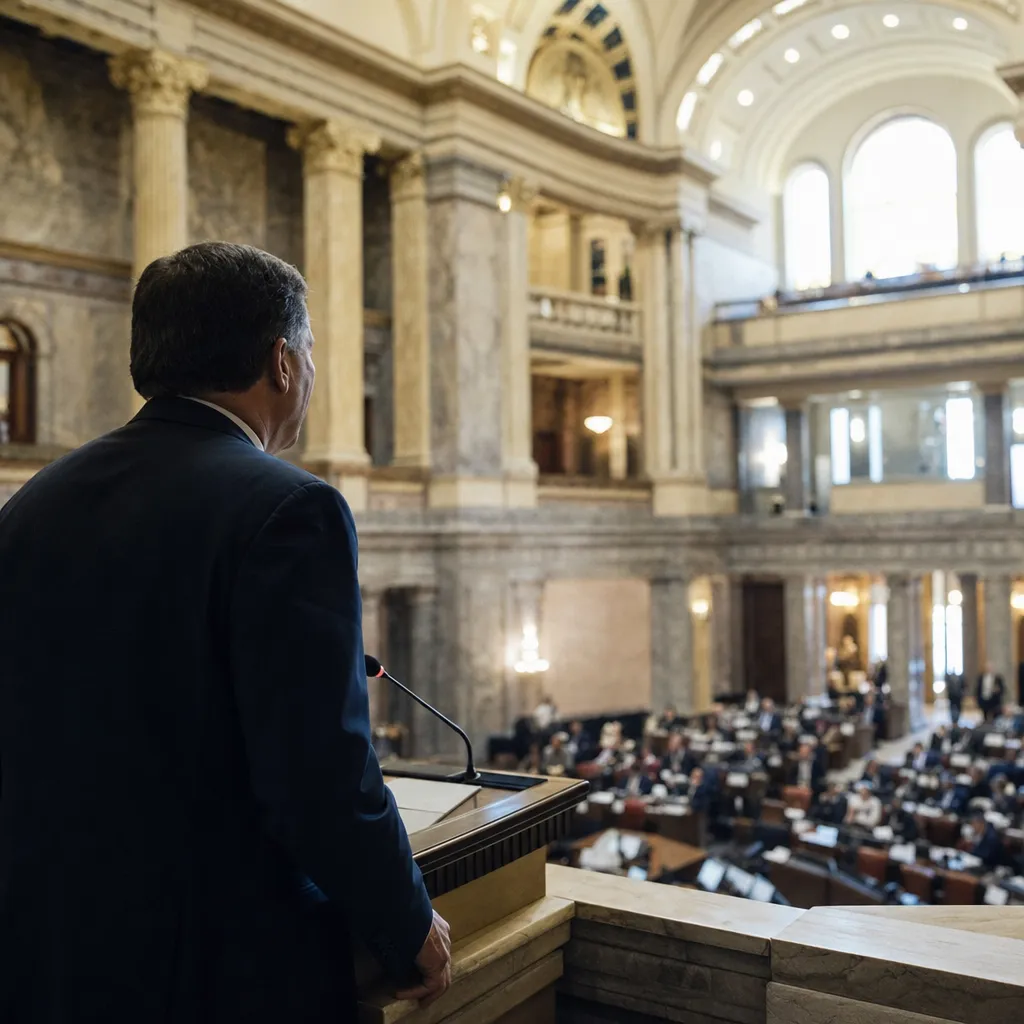
The Senate Commerce Committee moved the Stop AI Price Gouging and Wage Fixing Act — one of several AI accountability bills clearing committee in the same week.
The Senate Commerce Committee has advanced the Stop AI Price Gouging and Wage Fixing Act, a bill that would prohibit AI systems from setting individualized prices based on personal data and bar AI from coordinating wage suppression across employers. It is one of several AI accountability measures clearing committee in the same week — the clearest signal yet that federal AI legislation is finally moving from introduction to action.
The bill's broader significance is about trajectory, not just content. Since early 2025, Congress has introduced more than 700 AI-related bills. Most have died in committee. The simultaneous advancement of multiple AI accountability measures through the Senate Commerce Committee in October 2026 marks a shift: AI regulation at the federal level is no longer just being proposed — it is being moved, according to DC AI Decoded.
What the Bill Does
The Stop AI Price Gouging and Wage Fixing Act targets two AI practices that consumer advocates and labor economists have identified as the next frontier of AI-driven harm:
AI-individualized pricing refers to the use of personal data — purchase history, browsing behavior, location, demographic signals — to charge different customers different prices for the same product or service. The practice is already widespread in airline ticketing, rideshare pricing, and insurance underwriting. The bill would prohibit AI systems from using personal data as an input to individualized price determination.
AI-coordinated wage suppression refers to situations where AI systems used by multiple employers independently arrive at similar compensation and hiring decisions — producing de facto market coordination without any explicit agreement between companies. Labor economists have documented this pattern emerging in gig economy platforms and professional hiring tools, where AI-generated salary recommendations from similar training data tend to cluster below market rates across the industry.
Why This Week
According to DC AI Decoded, the price gouging and wage fixing bill was one of multiple AI accountability measures advanced by Senate committees in a single week. The convergence is not coincidental.
Get this in your inbox.
Daily AI intelligence. Free. No spam.
The political dynamic has shifted because the harms are becoming concrete and documented rather than hypothetical. AI-driven wage patterns are now traceable in labor market data. AI pricing discrimination has produced legal complaints across multiple sectors. Congressional constituents are experiencing the effects — not as abstract future risk but as current-year economic outcomes.
Congressional staff and committee chairs have described October 2026 as the month when AI accountability legislation "found its window" after 18 months of bill introductions that failed to advance. The specific provisions of the price gouging and wage fixing bill are less important than the fact that they cleared committee at all.
Who This Affects
For businesses, the bill's passage would impose direct constraints on a growing category of AI deployment:
- Retailers and e-commerce platforms that use dynamic pricing engines informed by customer data would need to demonstrate that personalization does not produce individualized prices based on protected personal attributes
- HR technology vendors whose tools make compensation and hiring recommendations would face scrutiny over whether their outputs produce wage coordination effects across multiple employer clients
- Insurance and financial services firms using AI-driven risk scoring that affects premium or loan pricing would need to evaluate their systems against the bill's standard
The central legal question the bill does not yet fully resolve: the distinction between "personalized offers" and "individualized pricing." A discount offered to a customer based on their purchase history is different from a price set higher for a customer based on inferred willingness to pay. Where that line falls determines whether the bill reshapes the AI-powered pricing industry or creates a compliance threshold narrow enough to navigate around.
The Broader Legislative Picture
The same Senate Commerce Committee session also considered measures on AI transparency in hiring, AI-generated political advertising disclosure, and AI accountability in financial services. The Senate Judiciary Committee is simultaneously advancing AI copyright legislation. This is the most concentrated period of federal AI legislative action since AI regulation became a serious congressional priority.
None of these bills have yet passed the full Senate. But their committee advancement fundamentally changes the compliance calculation for corporate AI planning. The era of treating federal AI regulation as a distant, hypothetical risk is over for any enterprise with significant AI pricing or compensation systems.
What to Watch
The bill now moves toward a full Senate floor vote. Opposition will concentrate on the individualized pricing language — specifically the definition of "personal data" as an input to pricing. Watch for industry-backed amendments that narrow that definition to behavioral data rather than demographic data, or that carve out "loyalty program" pricing as distinct from individualized price discrimination.
The House has parallel AI pricing legislation in committee. If both chambers advance bills, a conference process is likely — and the final language will determine whether AI pricing becomes a regulated activity with enforcement mechanisms or whether definitional workarounds leave existing systems largely intact.
Did this help you understand AI better?
Your feedback helps us write more useful content.
Get tomorrow's AI briefing
Join readers who start their day with NexChron. Free, daily, no spam.