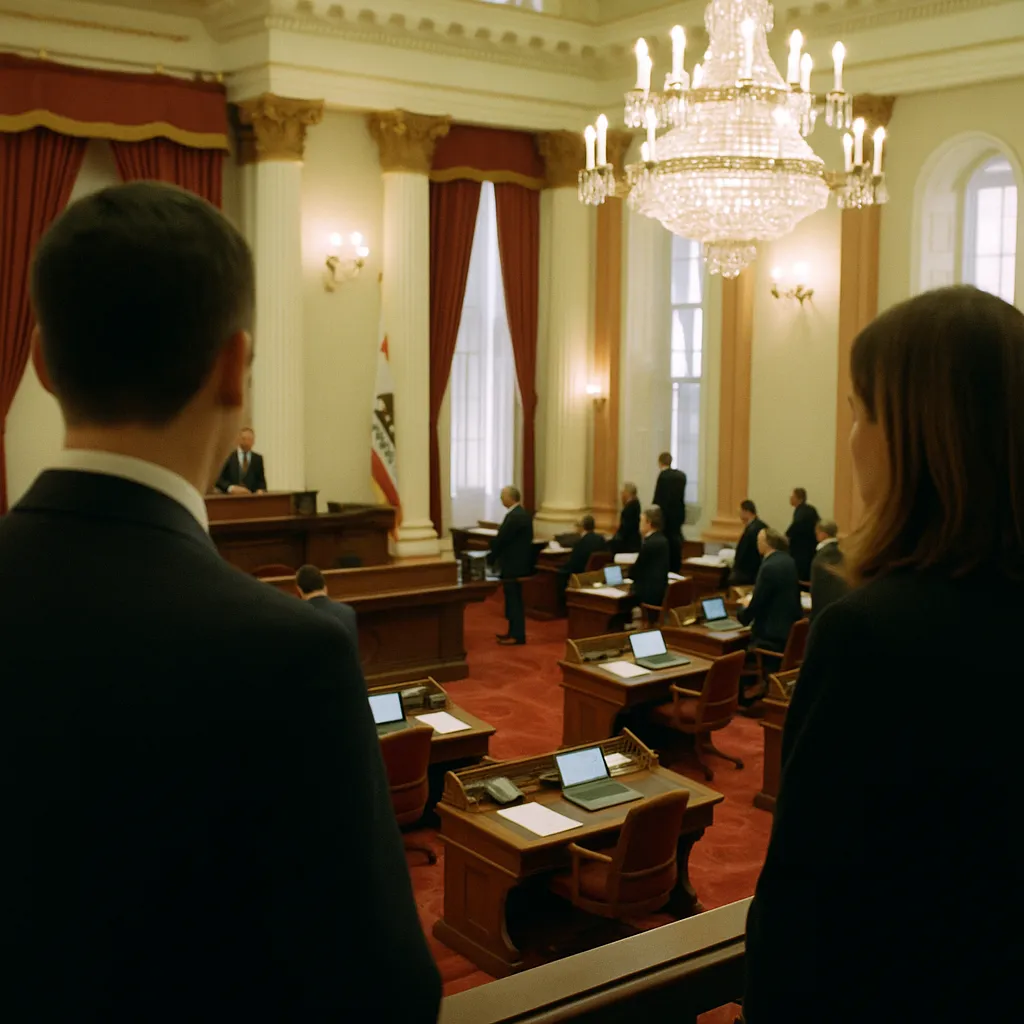
California's Senate voted 39-0 to ban generative AI companion chatbots in toys for children 12 and under, sending SB 867 to the Assembly with the nation's strongest child AI safety signal yet.
California Senate Passes 39-0 Bill Banning AI Chatbots in Children's Toys
By Hector Herrera | June 2, 2026
California's Senate voted 39-0 to ban generative AI companion chatbots in toys designed for children 12 and under, sending the legislation to the Assembly and setting up the nation's most significant child AI safety rule to date. A unanimous vote at this scale is a political signal: no California senator was willing to go on record defending AI chatbots in kids' toys.
SB 867, authored by Sen. Steve Padilla, imposes a four-year moratorium — a temporary ban while rules are written — on the manufacture and sale of toys that include generative AI chatbot features for children in that age group. The bill does not ban AI in toys outright; it specifically targets conversational AI companions, the category that generated the most documented harm.
Background
The legislation's most direct catalyst was the 2024 death of Sewell Setzer, a 14-year-old who formed an intense emotional attachment to a chatbot on the platform Character.AI before dying by suicide. The case prompted lawsuits, congressional hearings, and a wave of state bills. California's version targets the hardware layer — the toys themselves — rather than just the platforms.
Generative AI companion chatbots, in the context of this bill, means AI systems capable of open-ended conversation that can form ongoing, personalized relationships with users. That's distinct from simple voice commands or scripted responses already common in children's toys.
What the Bill Does
Key provisions of SB 867:
Get this in your inbox.
Daily AI intelligence. Free. No spam.
- Four-year moratorium on manufacturing or selling toys with generative AI companion chatbots targeting children 12 and under
- Applies to toys sold in California, which under existing commerce rules effectively sets a national floor — manufacturers rarely produce California-only variants
- Buys time for the California Attorney General's office and relevant agencies to develop binding safety standards before the technology returns to market
- Does not apply to educational AI tools or non-conversational AI features in toys
The bill now moves to the Assembly, where it faces a more complex path. The Assembly has historically been more receptive to technology industry arguments about regulatory overreach. Expect intense lobbying from toy manufacturers and AI platform companies during the Assembly committee process.
Why This Matters
For parents: The bill signals that child AI safety is becoming enforceable law, not just corporate policy. The four-year window means the market for AI companion toys in California is effectively frozen until at least 2030 under state rules.
For the toy industry: Companies like Mattel, Hasbro, and a wave of AI-native toy startups that have been racing to embed conversational AI into plush toys and interactive figures face an immediate product strategy problem. California accounts for roughly 12% of U.S. retail sales. A California ban is not a market they can absorb by ignoring.
For AI platforms: Companies that white-label conversational AI APIs for consumer products — including character-based platforms — face scrutiny on how their technology ends up embedded in products marketed to children, regardless of which toy brand puts it in the box.
The 39-0 vote is the headline. Unanimous Senate votes on technology legislation are rare in Sacramento. The absence of any "no" votes suggests the political cost of opposing child AI safety regulation is, for now, higher than the cost of opposing tech industry interests.
What to Watch
The Assembly committee hearings are the next checkpoint — likely July or August. Watch for amendments that narrow the moratorium scope (possibly exempting "educational" AI companions) or shorten the four-year window. The toy industry's best play is redefining what counts as a "generative AI companion chatbot" to carve out their specific products.
If SB 867 passes the Assembly and is signed by the Governor, expect immediate legal challenges arguing federal preemption under the FTC Act. The Sewell Setzer lawsuit against Character.AI is still active in federal court and will likely generate new evidence that feeds directly into those Assembly hearings.
Sources: SB 867 full text — [California State](/education/csu-openai-renewal-faculty-revolt-2026) Legislature
Did this help you understand AI better?
Your feedback helps us write more useful content.
Get tomorrow's AI briefing
Join readers who start their day with NexChron. Free, daily, no spam.