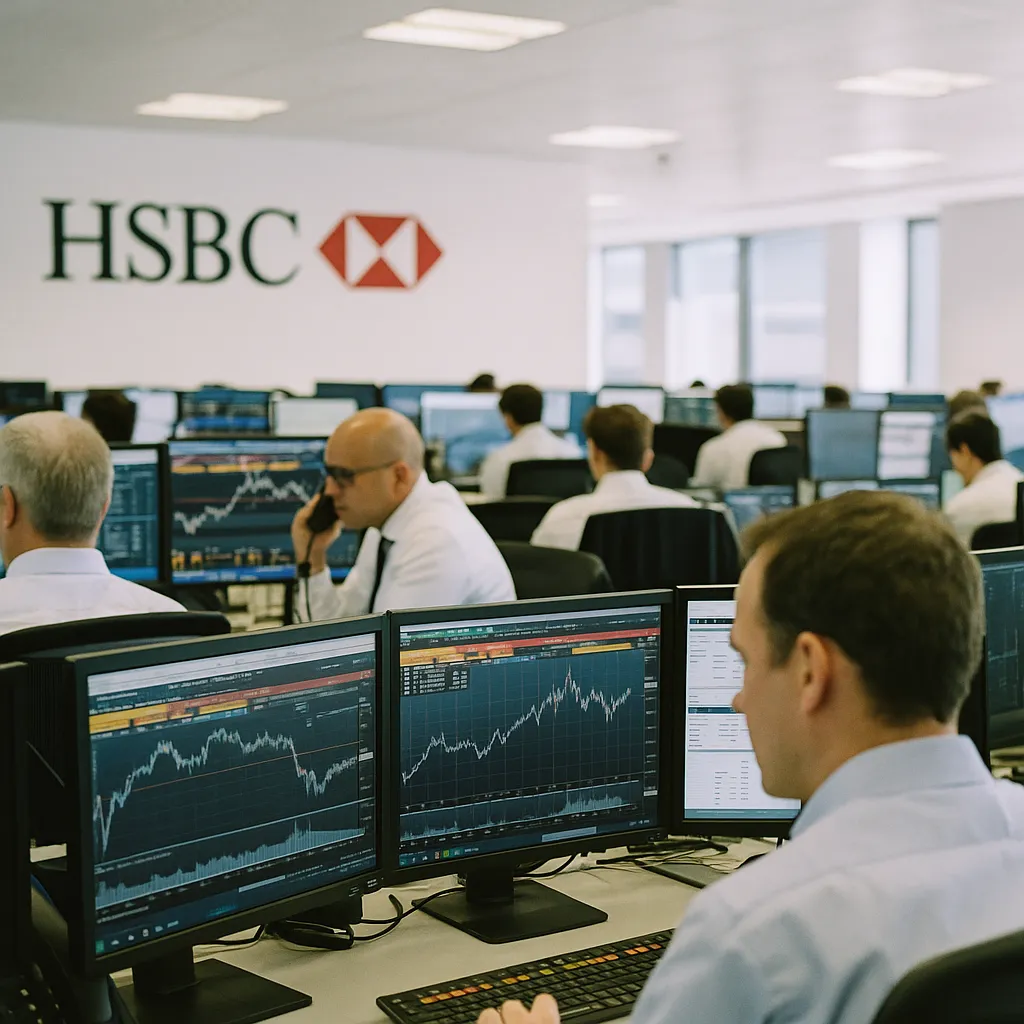
HSBC is eliminating approximately 70% of UK financial advisers as CEO Georges Elhedery bets on AI-driven wealth management tools to replace human advisory capacity — with departures expected by end of October 2026.
HSBC is eliminating approximately 70% of its UK financial advisers — and around half of its wealth management managers and specialists — as CEO Georges Elhedery bets the bank's future advisory capacity on AI-driven digital products. Departures are expected to complete by the end of October 2026, making this one of the most abrupt and significant AI-driven workforce reductions in UK financial services history.
The restructuring lands as Norway's DNB simultaneously announced 400 AI-driven job eliminations in its own banking operations — a same-week signal that European financial institutions are moving in synchronized, accelerating lockstep toward AI-first staffing models.
What HSBC is Actually Doing
The Wealth Advisor confirmed the bank is in active consultation over:
- ~70% of UK financial advisers facing elimination
- ~50% of wealth management managers and specialists being cut
- Departures completing by end of October 2026
- Replacement capacity: "digitally-enabled products" — HSBC's stated framing
A bank spokesperson confirmed the direction without providing final headcount figures, citing ongoing consultation. The spokesperson said HSBC is moving toward AI-powered wealth products that deliver advisory functions previously handled by human professionals.
This is not efficiency trimming. Cutting 70% of advisers in a single consultation round means HSBC has concluded its AI tools are ready to carry the full advisory relationship for the bulk of its UK wealth client base — not just the routine transactions and account monitoring already automated across the industry.
Context: Why Now
Elhedery, who took over as HSBC CEO in late 2024, has made AI transformation his defining strategic priority. His public positioning has been explicit: AI is not a cost tool, it is the product. The wealth management restructuring is the first major workforce consequence of that positioning.
For years, AI adoption in banking followed a predictable sequencing: automate fraud detection and compliance screening first, then process automation, then back-office analytics, then cautiously pilot AI in customer-facing functions. HSBC is collapsing that timeline. Moving directly to a 70% adviser reduction implies internal confidence — or internal pressure — to skip the cautious middle phases.
The DNB parallel is notable precisely because it is not coordinated. Two European banking institutions, operating independently, reached the same structural conclusion in the same week: human advisory capacity at current staffing levels is no longer defensible against AI alternatives.
Get this in your inbox.
Daily AI intelligence. Free. No spam.
Who Gets Affected
Mid-market wealth clients — individuals with meaningful savings and investment portfolios who worked with HSBC advisers for personalized guidance — face the most direct disruption. HSBC's private bank clients, who manage multi-million-pound relationships, are unlikely to see structural changes; private banking economics operate at different staffing ratios. The cut targets the advisory tier below that threshold.
These clients face a binary choice: adapt to AI-delivered wealth management and stay with HSBC, or seek human advisory services elsewhere. The latter option is increasingly constrained. The economics driving HSBC's decision apply across Barclays, Lloyds, NatWest, and Santander UK simultaneously. Firms that have not yet cut are under pressure to follow — which shrinks the market for displaced advisers and for clients who prefer human advisory relationships.
Displaced advisers face a structural, not cyclical, employment shock. Previous rounds of banking job reductions tied to interest rate cycles, post-merger integration, or cost-cutting programs offered a path back into the sector once conditions changed. AI-driven restructuring does not offer that path. The function being eliminated is not being reduced temporarily; it is being transferred to software.
The Regulatory Complication
UK financial regulation — enforced by the Financial Conduct Authority (FCA) — requires firms to act in clients' best interests and ensure the suitability of financial products. Those obligations exist regardless of whether advice is delivered by a human or an AI system.
What the FCA has not yet resolved is the liability framework when an AI system delivers unsuitable advice. If a client suffers a material financial harm following an AI-generated recommendation, it is not clear under current rules who bears accountability — the algorithm, the firm, the former human adviser whose function the AI replaced, or some combination.
The FCA has signaled active interest in AI deployment in retail financial services but has not issued specific guidance on AI-delivered wealth advice. HSBC's restructuring will force the issue. When the bank has 70% fewer licensed human advisers and thousands of clients receiving AI-generated guidance, the FCA cannot defer indefinitely.
Industry observers expect guidance — or at minimum a consultation paper — before year end.
A Sector-Wide Reckoning
Goldman Sachs estimated earlier this year that AI is eliminating approximately 16,000 net U.S. jobs per month, concentrated in administrative and entry-level roles. HSBC's announcement suggests the next displacement wave is arriving in professional advisory services — a white-collar segment that prior labor displacement models categorized as relatively insulated from automation.
That assumption is being revised in real time. Wealth management advisers require licensing, client relationship skills, and regulatory accountability. The AI systems replacing them at HSBC are being asked to meet all three requirements at scale.
Whether those systems perform adequately — for clients, regulators, and the bank's bottom line — will become the most closely watched AI deployment case in European financial services over the next 12 months.
What to Watch
HSBC's post-restructuring client satisfaction scores, complaint volumes, and retention rates will be the leading indicators. If AI-delivered wealth management maintains client outcomes at comparable or better levels, the case for sector-wide adoption becomes hard to argue against — and Barclays, Lloyds, and NatWest face compressed timelines to follow.
If outcomes deteriorate, the FCA escalation is automatic and the reputational exposure for HSBC is significant. The bank will not be able to claim it moved cautiously. By cutting 70% in a single round before binding regulatory guidance exists, HSBC has made itself the test case for AI wealth management in the UK.
Did this help you understand AI better?
Your feedback helps us write more useful content.
Get tomorrow's AI briefing
Join readers who start their day with NexChron. Free, daily, no spam.