BNY Mellon and Microsoft deployed AI agents that autonomously negotiated a US Treasury bond price on November 17 — the first AI-to-AI bond market transaction, with human approval still required at settlement.
BNY Mellon and Microsoft AI Agents Execute First-of-Kind Autonomous US Treasury Trade
Bank of New York Mellon and Microsoft deployed AI agents that autonomously negotiated and agreed on a price for a US Treasury bond trade on November 17 — billed as the first AI-to-AI bond market transaction. Human approval was still required before the trade settled, but the milestone demonstrates that agentic AI has arrived in fixed-income markets and forces every major bank, regulator, and market infrastructure provider to decide how they respond.
What Actually Happened
According to Bloomberg's reporting, two AI agents — one representing BNY Mellon's trading desk and one representing a counterparty — communicated directly to arrive at a price for a US Treasury bond without human involvement in the negotiation itself. The trade did not auto-execute: human traders reviewed the AI-agreed terms and approved the settlement.
The distinction matters. This was not a fully autonomous end-to-end trade. It was an autonomous price discovery process, with a human in the settlement loop. That framing is deliberate — it positions the technology as augmenting human traders rather than replacing them, and it keeps the trade within existing regulatory frameworks that require human accountability for settlement decisions in most jurisdictions.
What made this technically possible is the convergence of two capabilities that have matured significantly in 2026: AI agents that can interpret market data and form preferences in real time, and standardized communication protocols that allow agents from different organizations to negotiate without prior agreement on a shared language or API schema.
Why Fixed-Income Markets Are the Right Starting Point
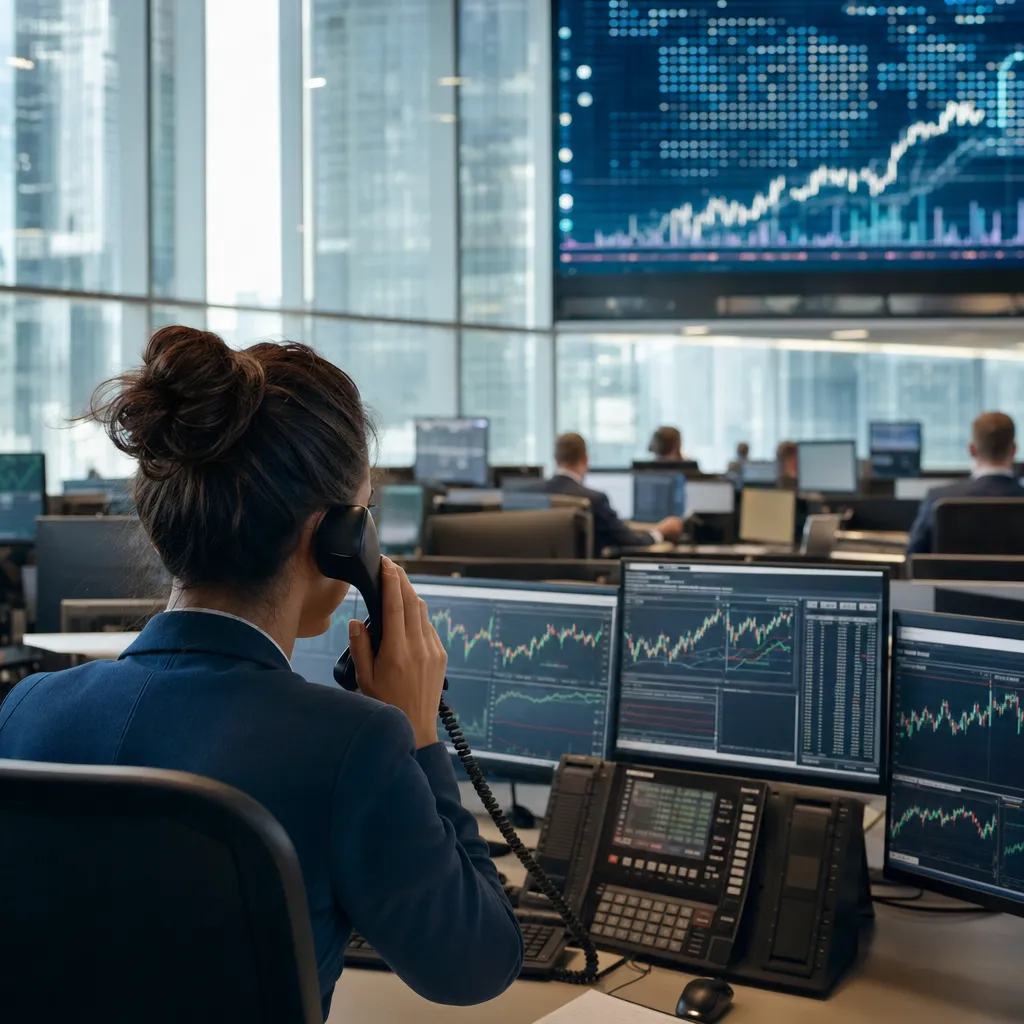
Foreign exchange and equities markets already run on algorithmic trading at microsecond speeds — there is very little left for AI agents to accelerate there. Fixed income is different. US Treasury markets, corporate bonds, and municipal bonds still rely heavily on voice negotiation, chat-based RFQ (request for quote) workflows, and bilateral phone calls between traders at large institutions. The market is enormous — the US Treasury market alone trades roughly $600 billion per day — and much of it still runs on processes that would look familiar to a trader from 2005.
Get this in your inbox.
Daily AI intelligence. Free. No spam.
AI agents can compress the negotiation cycle from minutes (or hours, for less liquid instruments) to seconds, and they can operate continuously — running RFQs across dozens of counterparties simultaneously, finding best execution without the trader having to pick up a phone. For BNY Mellon, which operates as a custody bank and market intermediary rather than a directional trader, the efficiency gains from automated counterparty negotiation compound across the thousands of transactions they process daily.
The Systemic Risk Question
Speed creates systemic risk in markets. The 2010 Flash Crash — when algorithmic trading amplified a feedback loop that briefly erased nearly $1 trillion in US equity market value — is the clearest historical example. AI agents negotiating prices in Treasury markets raise a structurally similar concern: if agents from multiple banks are trained on similar objectives and respond to the same market signals in similar ways, they can synchronize in ways that amplify volatility rather than dampen it.
Three risks regulators are likely focused on:
- Correlated behavior — agents from different banks converging on the same strategy during stress events, amplifying rather than absorbing price moves
- Accountability gaps — if an AI agent agrees to a price that later causes a loss, existing legal frameworks for trader liability do not map cleanly onto agent behavior
- Transparency — regulators at the SEC and CFTC have required audit trails for algorithmic trading. Whether those requirements extend to AI agent communication logs is unresolved
What This Means for Banks
Every major fixed-income trading desk will now be evaluating when to deploy AI agents for price negotiation. The question is no longer theoretical — it is competitive. If BNY Mellon and Microsoft can demonstrate meaningfully better execution quality or lower operational costs through AI negotiation, banks that delay face a margin disadvantage.
The Microsoft angle is significant. This was not a fintech startup demo. It was Microsoft Azure AI infrastructure integrated into a systemically important financial institution's core trading operations. That gives the technology immediate credibility with procurement and risk committees at other large banks that already have Azure relationships.
What to Watch
Watch for the Federal Reserve and OFR (Office of Financial Research) to issue guidance or request comment on AI agent participation in Treasury markets — the BNY/Microsoft announcement gives them a specific, documented case to respond to. Also watch whether the CFTC, which regulates Treasury futures markets, signals jurisdiction over AI agent negotiation behavior. The human-in-settlement-loop design of this first trade looks like it was chosen partly to avoid triggering existing automated trading regulations — but regulators may close that gap quickly.
Did this help you understand AI better?
Your feedback helps us write more useful content.
Get tomorrow's AI briefing
Join readers who start their day with NexChron. Free, daily, no spam.