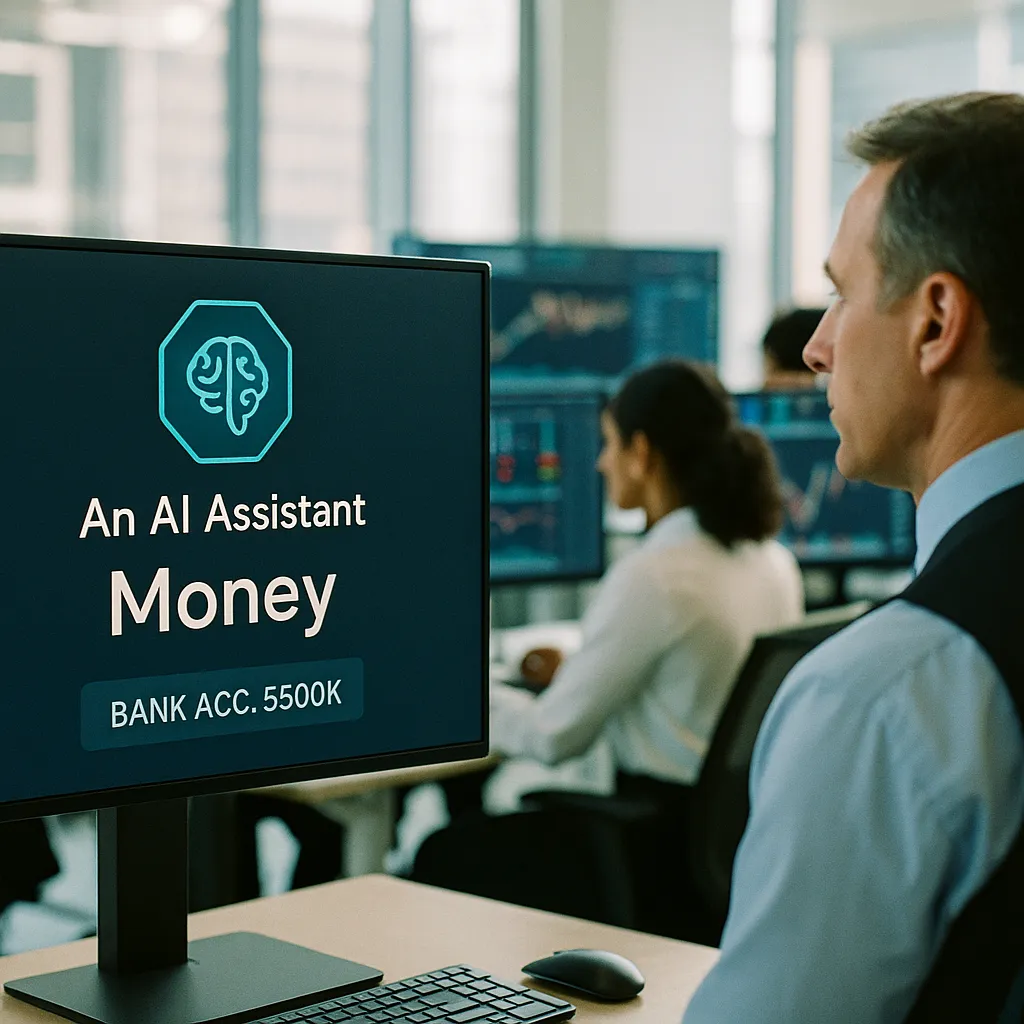
Anthropic launched 10 financial AI agents for enterprise banks while OpenAI connected ChatGPT to 12,000+ institutions via Plaid — both companies are bidding to become the foundational AI layer for financial services.
Anthropic and OpenAI Are Racing to Own Banking's AI Backbone
By Hector Herrera | May 25, 2026 | Finance
Anthropic launched ten financially-focused AI agents capable of building pitchbooks, auditing financial statements, and drafting credit memos — a direct enterprise challenge to OpenAI's newly deployed personal finance tools connecting to more than 12,000 financial institutions via Plaid. Both companies are making explicit, parallel bids to become the foundational AI layer for financial services. The race is no longer theoretical.
What is at stake is not a specific product. It is the contract that financial institutions standardize on — the AI infrastructure agreement that becomes as durable and embedded as their core banking software.
What Each Company Launched
According to PYMNTS reporting, the two bids diverged along predictable lines:
Anthropic's enterprise push targets the institutional side of finance — the investment banks, commercial lenders, and large financial services firms that need AI capable of handling complex, multi-document workflows under strict compliance and audit requirements. The ten new agents include:
- Pitchbook builder — generates structured investment presentation decks from deal data and market inputs
- Financial statement auditor — flags inconsistencies and anomalies across multi-year financials
- Credit memo drafter — produces structured credit analysis documents for underwriting workflows
- Additional agents covering regulatory filings, risk disclosure summaries, and earnings call analysis
The agents are built on Claude and positioned for deployment within enterprise AI environments where data governance and model behavior documentation are compliance requirements.
OpenAI's consumer and mid-market approach leverages ChatGPT's massive installed base combined with a Plaid integration connecting to over 12,000 financial institutions. The offering allows users to connect financial accounts to ChatGPT, ask natural-language questions about their financial data, and receive analysis, recommendations, and alerts — a consumer personal finance layer built on real-time account data.
Get this in your inbox.
Daily AI intelligence. Free. No spam.
Different Flanks, Same War
The two approaches reflect different theories of how AI captures the financial services market.
OpenAI is betting on volume and distribution. ChatGPT has hundreds of millions of active users, and connecting those users' financial accounts to a conversational AI layer creates a persistent, high-frequency engagement surface. If you are checking your spending, modeling a mortgage, or tracking investments through ChatGPT, OpenAI becomes embedded in your financial decision-making daily. Consumer trust converts to institutional relationships over time — retail banking follows where consumers already are.
Anthropic is betting on compliance and trust at the enterprise tier. Financial institutions — particularly investment banks and commercial lenders — face strict regulatory requirements around model explainability, data handling, and audit trails. Anthropic's Constitutional AI approach and its published safety documentation give compliance officers a framework they can defend to regulators. Enterprise contracts in financial services are slow to sign and slow to replace; winning the first significant contracts creates durable lock-in.
Why This Matters for Financial Institutions
Banks, credit unions, and financial services firms are currently in the evaluation phase — assessing which AI platform to standardize on, knowing that the first significant integration will likely anchor their AI infrastructure for years.
The practical pressures are real. Financial institutions are under simultaneous pressure from regulators demanding AI governance documentation and from boards demanding AI-driven efficiency gains. Both pressures push toward enterprise AI partnerships with well-documented model behavior — which is why Anthropic's compliance positioning is a genuine differentiator at the C-suite level, not just a marketing claim.
For consumer-facing finance, the Plaid integration is a meaningful moat. Plaid's connections to 12,000+ institutions are the result of years of data-sharing agreements that are not trivially replicated. Any competitor wanting to offer the same consumer finance AI layer would need to rebuild that integration fabric.
The specific risks for institutions choosing now:
- Vendor concentration — standardizing on one AI platform for core workflows creates single-point-of-failure risk. Regulators in the EU and increasingly in the US are scrutinizing third-party AI dependency in financial services.
- Model version risk — both OpenAI and Anthropic update their underlying models. For regulated workflows like credit decisioning, model drift between versions must be validated and documented before deployment.
- Data sovereignty — sending proprietary financial data to third-party AI providers raises questions about training data use, cross-customer learning, and regulatory jurisdiction that neither company has fully resolved.
The Third Player Nobody Is Discussing
Google and Microsoft are not absent from this race. Microsoft Copilot is already deployed in financial services workflows through M365 integrations, and Bloomberg's partnership with OpenAI for Bloomberg Terminal AI features creates a third angle. The PYMNTS framing of a two-horse race between Anthropic and OpenAI is accurate for the specific AI-agent-as-backbone play — but the broader battle for banking AI infrastructure involves more competitors and will take longer to resolve.
What to Watch
Watch for the first publicly announced enterprise contracts with major financial institutions naming Anthropic or OpenAI as a designated AI infrastructure provider. That announcement — not the product launches — will be the real signal of which company has converted positioning into standardization. Also watch for regulatory guidance from OCC and FDIC on third-party AI dependency requirements, which could narrow the field based on compliance infrastructure rather than product capability.
Hector Herrera is the founder of Hex AI Systems and the author of NexChron. This article covers AI industry developments and does not constitute financial advice.
Did this help you understand AI better?
Your feedback helps us write more useful content.
Get tomorrow's AI briefing
Join readers who start their day with NexChron. Free, daily, no spam.