UW researchers find teachers are navigating AI in classrooms largely on their own, caught between students who use AI regardless of rules and administrators who have avoided clear policy.
Teachers Are Navigating AI Without a Map — UW Research Documents the Gap Between Policy and Classroom Reality
By Hector Herrera | May 10, 2026 | Education
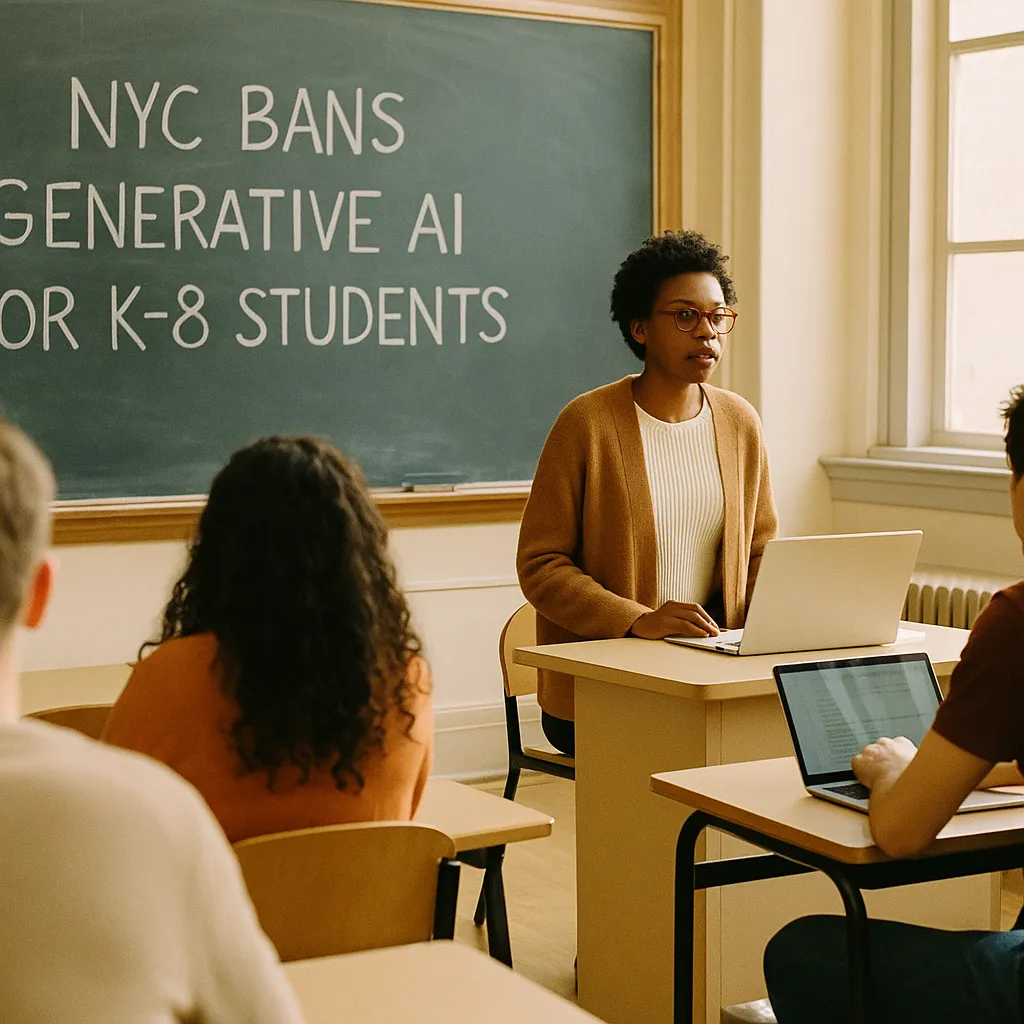
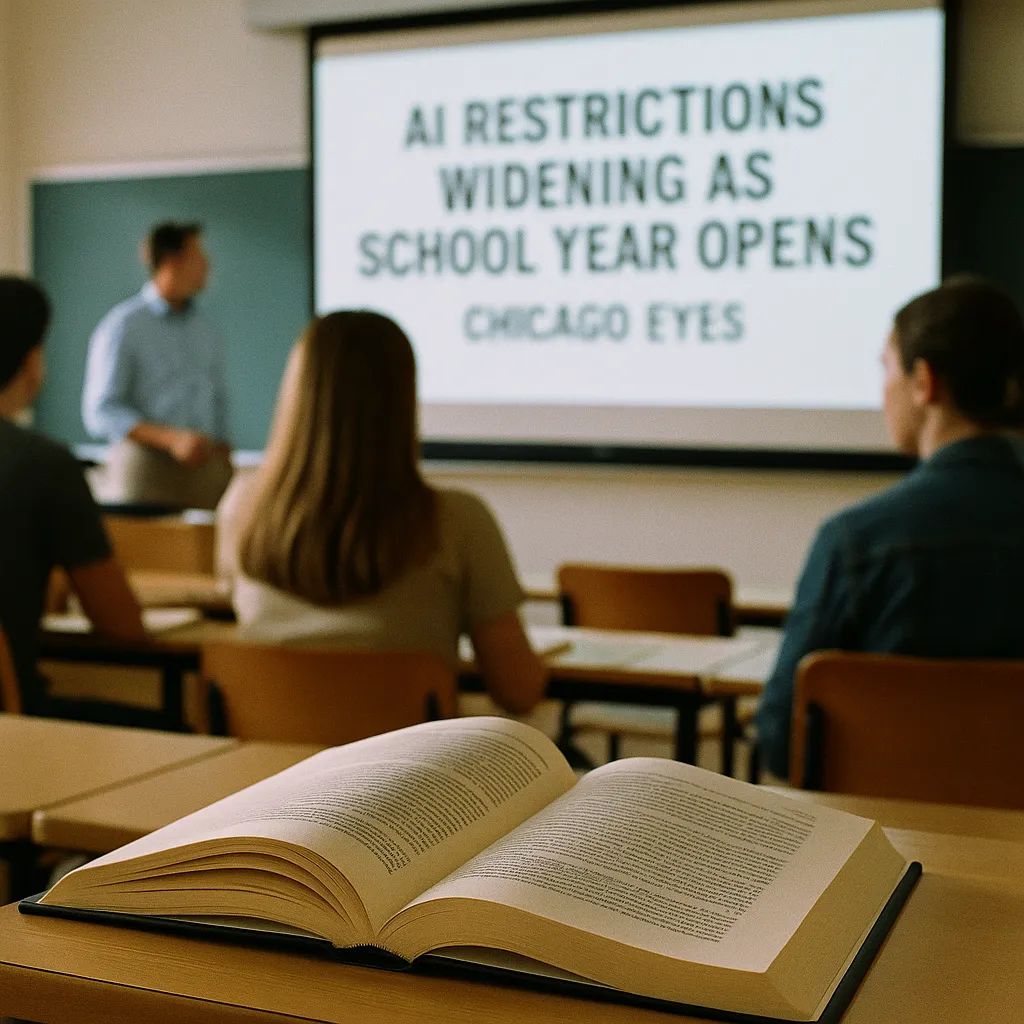
K-12 and university teachers are adapting to AI in their classrooms faster than schools can write rules for it, and the result is a chaotic middle ground where student use is widespread, institutional guidance is inconsistent, and teachers are largely on their own to figure it out. That's the finding from University of Washington researchers whose work, published this week, documents the widest gap yet seen between what school policies say and what actually happens in classrooms.
Context
Schools have been trying to write AI policies since ChatGPT launched in late 2022. Three years later, the UW research team finds that most districts and universities still have inconsistent, contradictory, or absent guidance — while students have moved on and are using AI tools routinely regardless of the official stance. The researchers interviewed K-12 teachers, college faculty, and school administrators across multiple states, documenting a wide spectrum of responses and highlighting the institutional lag that has left teachers to make high-stakes judgment calls without support.
What Teachers Are Actually Doing
The UW findings reveal a fractured landscape with no dominant strategy emerging:
Enthusiastic adopters — A meaningful minority of teachers have integrated AI tools into their curriculum actively. They assign AI-assisted projects, teach students to prompt effectively, and treat AI literacy as a core 21st-century skill alongside reading and math. These teachers report high student engagement and are largely improvising their own pedagogical frameworks because no established curriculum exists.
Principled resisters — A smaller but vocal group of teachers have concluded that AI fundamentally undermines the learning process their assignments are designed to serve. They've redesigned assessments around in-person work, oral exams, and handwritten responses — approaches that are more labor-intensive to administer but harder to AI-generate. These teachers are not technophobes; many are technically sophisticated and have made deliberate choices about what they believe constitutes genuine learning.
Uncomfortable middle — The largest group sits between these poles: teachers who know their students are using AI, who have received no clear institutional guidance, and who are enforcing rules inconsistently because they don't know what the right rule is. Many report grading work they suspect was AI-assisted without certainty, and feeling unable to act without proof.
The Policy Gap
The UW research found that administrators are often more conflict-averse about AI than teachers. Districts and universities have been slow to issue clear policy because any definitive stance creates controversy — permissive policies upset parents concerned about academic integrity, restrictive policies upset teachers who want to use AI tools themselves and students who see AI as a normal part of their lives.
Get this in your inbox.
Daily AI intelligence. Free. No spam.
The result is vague guidance that pushes decision-making down to individual teachers. "Use AI responsibly" and "ensure work reflects your own thinking" are the kinds of phrases appearing in district documents — statements that tell teachers nothing about what to do when a student submits an essay that an AI detector flags as 80% machine-generated.
AI detection tools have made the problem worse, not better. Tools like Turnitin's AI detection and GPTZero produce false positive rates that teachers find unacceptable for use as disciplinary evidence. A false positive rate of even 5-10% means accusing innocent students of cheating at significant scale. Most teachers the UW team interviewed have stopped using detection tools or use them only as a signal to have a conversation, not as proof of wrongdoing.
The Pedagogy Problem
The deeper issue the UW research surfaces is that AI doesn't just make cheating easier — it makes certain pedagogical approaches obsolete. Assignments designed to test whether students can recall, organize, and express information in writing assume that producing that writing is a meaningful demonstration of learning. When AI can produce that writing on demand, the assignment no longer tests what it was designed to test.
Some teachers have responded by redesigning for depth: assignments that require personal experience, local context, specific relationship knowledge, or real-time in-class demonstration. Others have embraced a "show your work" approach that requires students to document their thinking process alongside their outputs — treating the process as the evidence of learning, not just the product.
But these adaptations require teacher time, creativity, and institutional support — all of which are in short supply. The UW researchers found that teachers who are most successfully adapting to AI are doing so through significant personal effort, often sharing strategies with colleagues informally rather than through any systematic professional development.
Why This Matters
For students: The uneven teacher response means students' relationship to AI in their education is determined largely by which teacher they happen to have. A student whose algebra teacher is an enthusiastic AI adopter and whose English teacher is a principled resister learns two completely incompatible lessons about what AI is for and when it's appropriate.
For parents: The lack of institutional clarity makes it nearly impossible for parents to reinforce consistent expectations at home. "Ask your teacher" is not an answer when different teachers give different answers.
For school systems: The UW research makes clear that the current approach — individual teachers improvising in an institutional vacuum — is not sustainable. Schools need to make choices about what skills they are trying to develop and what role AI plays in developing them. That's a curriculum question, not a technology question, and it requires leadership from administrators who have mostly been avoiding it.
What to Watch
Several states, including Idaho (which enacted an AI education law this spring) and others with pending AI literacy graduation mandates, are beginning to force the institutional question by requiring that schools teach AI skills explicitly. As those mandates take effect, they'll push districts to develop coherent curriculum — which will in turn require taking positions on AI in assignments that current policy avoids.
Watch also for the emergence of AI-integrated pedagogy research: the UW study is one of several beginning to document what actually works when teachers integrate AI intentionally. That evidence base, when it matures, will give administrators something to point to other than intuition.
Source: UW News — How Are Teachers Reckoning with AI in Schools?
Did this help you understand AI better?
Your feedback helps us write more useful content.
Get tomorrow's AI briefing
Join readers who start their day with NexChron. Free, daily, no spam.