The OECD Digital Education Outlook 2026 documents AI's widening equity gaps across 38 countries, finding that teacher preparation—not technology—is the primary barrier separating effective AI adoption from expensive failure.
OECD's 2026 Education Report Maps AI's Uneven Impact on Schools Worldwide
By Hector Herrera | May 21, 2026 | Education
The OECD's Digital Education Outlook 2026, released this week, provides the most comprehensive cross-national analysis to date of how AI is being embedded in education systems across 38 member countries — and documents a consistent governance gap where AI tools arrive in classrooms faster than teacher training, data protection standards, or algorithmic bias audits can follow. The report is now the reference document international education policymakers cite when benchmarking their AI strategies.
The report arrives as national governments move from policy experimentation to implementation — and as evidence accumulates that early AI deployments in education are producing widely unequal outcomes by income, geography, and institutional capacity. The pattern is consistent across countries: early adoption in well-resourced institutions, slower uptake in under-resourced ones, and widening gaps between them.
What the report finds
According to the OECD, the central challenge is a governance mismatch. AI tools are being adopted at the classroom level — often through individual teacher initiative or district-level procurement — at a pace that national policy frameworks, teacher credentialing systems, and student data protection regimes were not designed to match.
Key findings across member countries:
-
Teacher preparation is the bottleneck. AI tools deployed without teacher training produce marginal or negative outcomes. Countries with structured AI pedagogical training programs show measurably better student results. The tools are not the problem; deploying them without preparing the people using them is.
-
Data governance is fragmented. Most countries lack national standards governing what student data EdTech AI platforms can collect, retain, and use for model training. The gap creates compliance uncertainty for institutions and genuine privacy risk for students — particularly minors in K-12 settings.
-
Equity gaps are widening. High-income districts and well-resourced institutions are adopting AI tools faster and more effectively than under-resourced schools. This amplifies existing educational inequality rather than reducing it — the opposite of what AI's proponents have consistently promised.
Get this in your inbox.
Daily AI intelligence. Free. No spam.
Assessment is the unsolved problem. AI tutoring and writing assistance tools are outpacing assessment systems designed to measure individual student work. Countries that haven't rethought assessment for an AI-fluent student population are measuring the wrong things — penalizing students who use AI tools that their employers will expect them to use professionally.
How countries are responding
The report documents a wide spectrum of national approaches.
At one end: countries like Singapore and Estonia have moved with structured intentionality — integrating AI tools with accompanying teacher training programs, updating assessment frameworks to measure AI-era competencies, and establishing national data governance standards that apply to EdTech platforms.
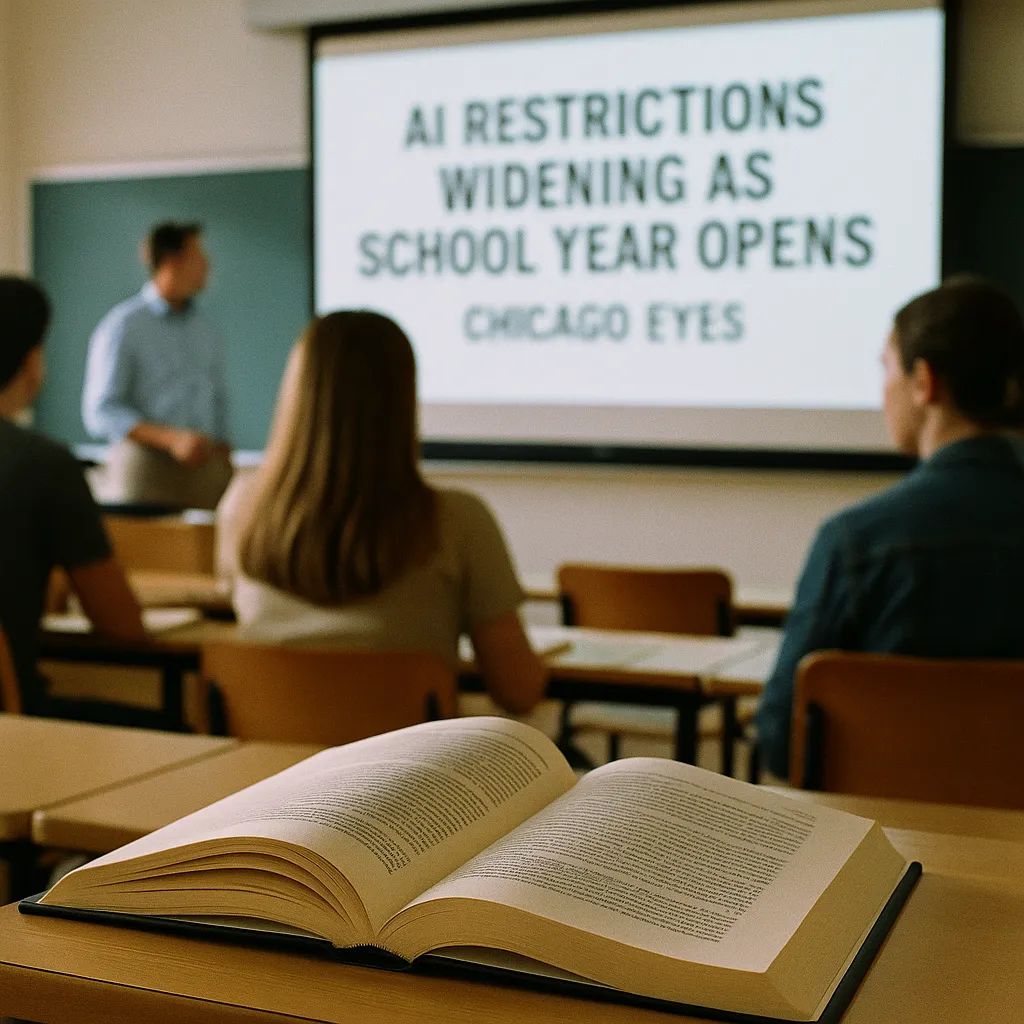
At the other end: several countries have implemented AI prohibitions in schools — banning tools like ChatGPT in student-facing contexts — that are difficult to enforce and widely circumvented. Prohibition as a primary strategy has not worked anywhere the OECD tracked.
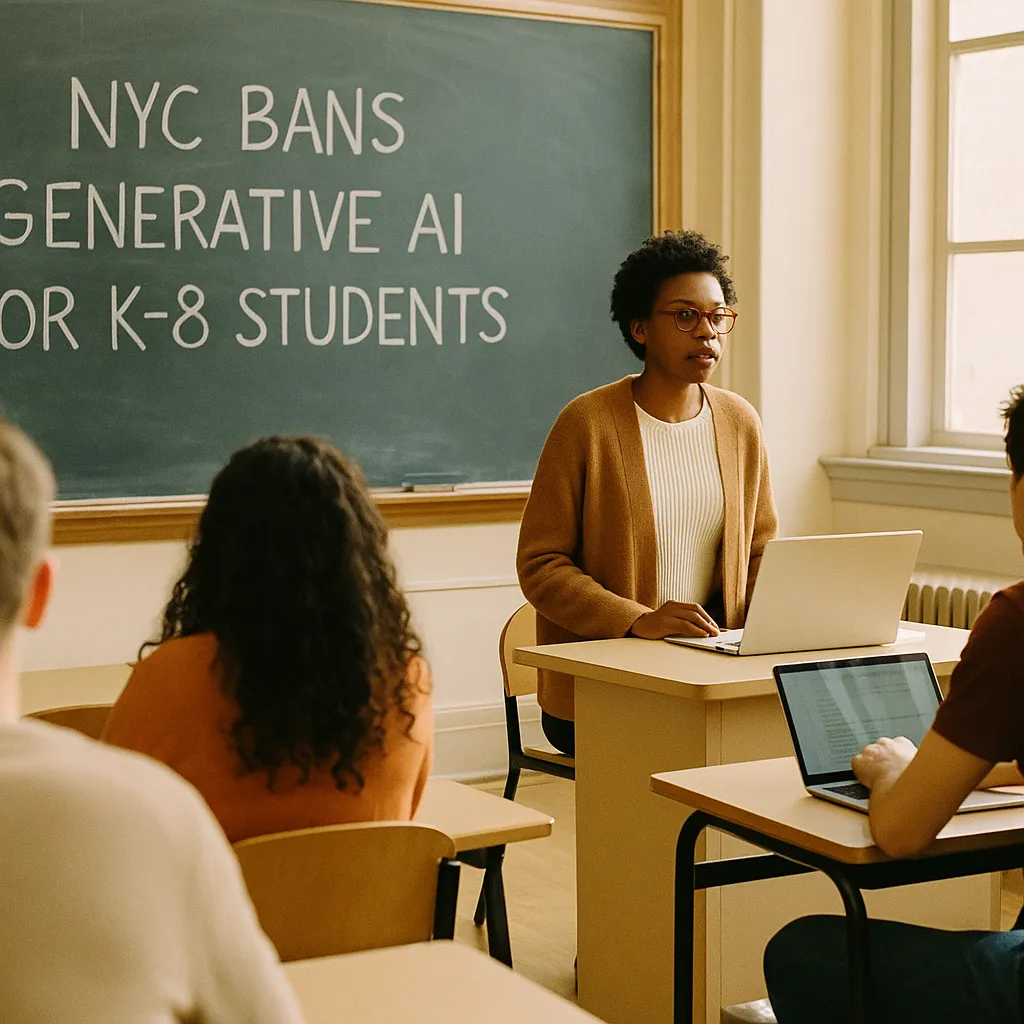
The United States presents a particularly fragmented picture. States like Idaho have passed laws focused on teacher AI training requirements. New York City implemented a two-year moratorium on AI in schools before reversing course. Boston became the first city with a formal AI literacy mandate. There is no federal framework governing AI in K-12 education, and the OECD data indicates that federal policy gaps produce incoherent state-by-state patchworks that disadvantage students in lower-capacity states who lack local resources to fill the national void.
For educators and administrators
The OECD report is now the document international education policymakers cite when designing AI governance frameworks. Its practical implications for district and school administrators don't require waiting for national policy:
Focus teacher training on judgment, not tool operation. The countries with the best measured outcomes teach educators to critically evaluate AI outputs, recognize hallucinations, and design learning experiences where AI assistance develops student capability rather than replacing student work. Tool proficiency is table stakes; critical AI judgment is the differentiator.
Rethink assessment before expanding AI access. AI-resilient assessment — project-based work, oral examination, collaborative problem-solving with AI — is the prerequisite for meaningful AI integration, not an afterthought. Schools that expand AI access without updating how they measure learning are setting themselves up for an integrity crisis.
Establish data governance before signing EdTech contracts. The report's data protection findings are a direct warning: institutions that sign AI platform contracts without understanding what student data is being retained and used for model training are creating future liability. Standard EdTech contracts do not automatically protect against this.
The equity stakes
The OECD data on widening equity gaps deserves direct attention. AI in education was widely promoted as a democratizing force — personalized tutoring at scale, accessible to any student with internet access. The 2026 data shows the opposite pattern emerging: schools with more resources, better-trained teachers, and stronger data governance are capturing AI's upside, while under-resourced schools are getting the downside without the benefit.
This is not a technology problem. It is a resource problem with a technology layer. The gap is addressable, but it requires deliberate policy — funding teacher training in under-resourced schools specifically, ensuring AI tools available in wealthy districts are available in poor ones, and building data governance infrastructure at the district level where schools lack capacity to build it themselves.
What to watch
The OECD will update the framework annually. The 2027 edition will be the first to capture longitudinal data — whether national AI education policies are producing measurable learning outcomes, or whether they are producing compliance paperwork and widening gaps. That evidence will determine whether 2026 is remembered as the year AI education matured, or the year the equity divergence became permanent.
Did this help you understand AI better?
Your feedback helps us write more useful content.
Get tomorrow's AI briefing
Join readers who start their day with NexChron. Free, daily, no spam.