SpaceX's IPO filing positions the company as a vertically integrated AI infrastructure platform — not a rocket company — with a $1.25 billion-per-month Anthropic compute deal and a $1.8 trillion valuation target that would set a new IPO record.
SpaceX S-1 Reframes Company as AI Infrastructure Giant Targeting $1.8 Trillion Valuation
By Hector Herrera | May 21, 2026 | Business
SpaceX filed its long-awaited IPO prospectus Wednesday, and the company it describes bears little resemblance to a rocket company. The S-1 positions SpaceX as a vertically integrated AI infrastructure platform — one that builds rockets to deploy the satellites, satellites to deliver the connectivity, and compute and energy systems to run the AI workloads. If the $1.8 trillion valuation target holds, it would be the largest IPO in history.
What the Filing Reveals
The S-1 filing, reviewed by Data Center Knowledge, discloses several significant details that reframe how SpaceX wants to be valued:
The Anthropic compute deal: SpaceX has a $1.25 billion-per-month compute agreement with Anthropic running through 2029. That's $15 billion per year in contracted AI compute revenue — before any other customers. Anthropic uses this compute to train and run its Claude models.
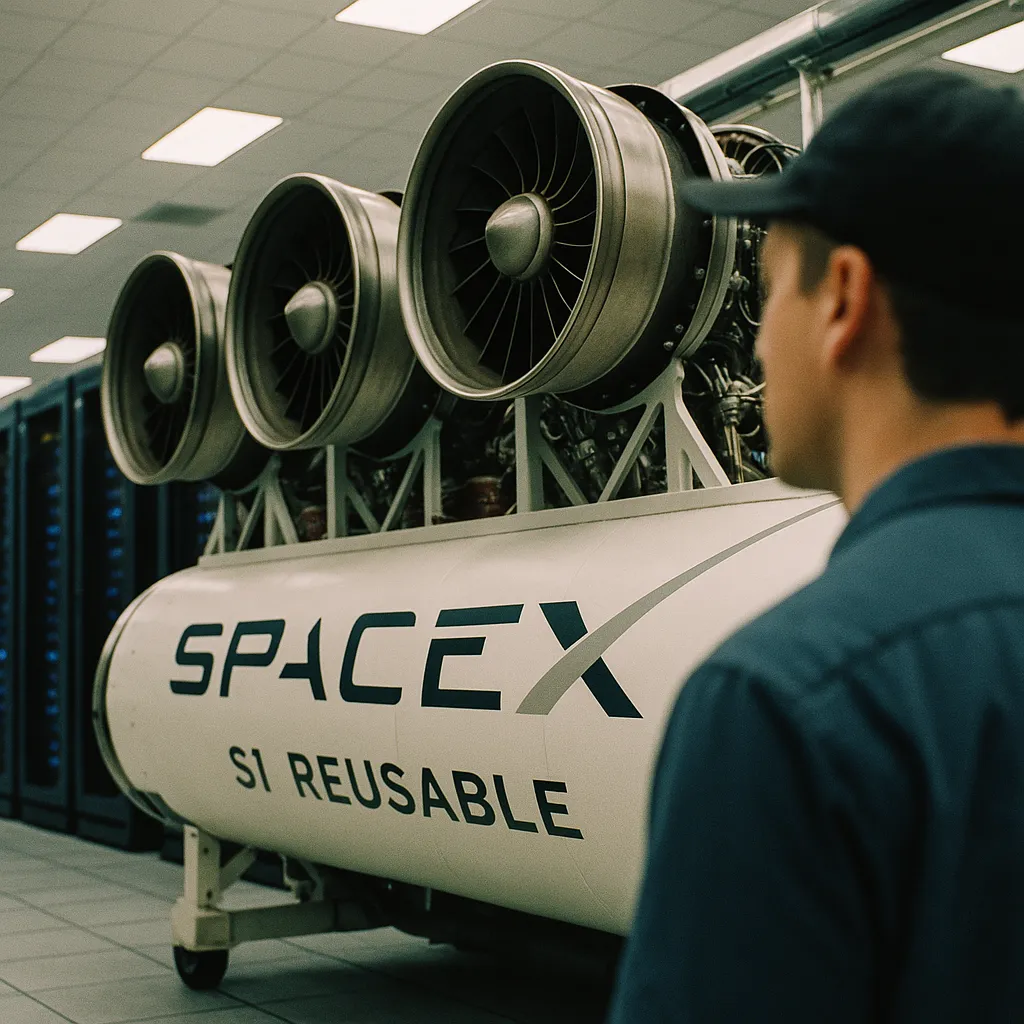
The energy investment: SpaceX has invested nearly $3 billion in gas turbines to power AI data centers. This is a direct response to the power availability crisis facing AI infrastructure buildout — rather than waiting for grid connections, SpaceX is generating its own power.
The orbital layer: The filing describes plans for orbital data centers — compute infrastructure deployed in space, using Starlink's satellite network as the backbone. This is not a vague future vision; it's part of the core infrastructure stack the company is pitching to investors.
Get this in your inbox.
Daily AI intelligence. Free. No spam.
The valuation target: At $1.8 trillion, SpaceX would surpass Saudi Aramco's 2019 record ($1.7 trillion) for the largest IPO in history. Current comparables: Nvidia sits around $3 trillion market cap; Amazon around $2.2 trillion. SpaceX is asking investors to value it in that tier.
Context
SpaceX has been the world's dominant launch provider for years, but the Starlink satellite internet business changed the company's economics. Starlink generates recurring subscription revenue at scale — as of early 2026, it serves millions of terminals globally, including maritime, aviation, and enterprise customers.
The AI infrastructure pivot extends that logic further. The company is arguing it controls something no other AI infrastructure provider can replicate: a vertically integrated stack from low-Earth orbit to the data center floor, with its own energy supply. AWS, Microsoft Azure, and Google Cloud all depend on third-party power and terrestrial networking. SpaceX is pitching a system where it owns the compute, the network, and the watts.
The Anthropic relationship is the anchor. A $15 billion annual compute contract with one of the three leading AI labs gives SpaceX a reference customer with name recognition and a locked-in revenue floor through 2029.
What It Means
For the AI infrastructure market: SpaceX entering as a compute provider at this scale changes the competitive landscape. The company is not building hyperscale cloud for general enterprise workloads — it's targeting AI-specific compute with a differentiated network and power stack. For companies like CoreWeave, Lambda Labs, and the hyperscalers, SpaceX represents a new category of competitor.
For Anthropic: The disclosed compute agreement makes Anthropic's dependency on SpaceX infrastructure visible for the first time. It also raises strategic questions: Anthropic's primary investor is Google, which operates its own competing cloud infrastructure. A $1.25 billion/month compute contract with a Google competitor is a notable data point.
For the IPO market: A $1.8 trillion target valuation would test public market appetite for AI infrastructure at a scale not previously attempted. The filing will trigger intense scrutiny of the revenue mix between launch services, Starlink subscriptions, and the newer AI compute contracts.
What to Watch
The S-1 filing begins the SEC review process. Roadshow timing has not been announced. Watch for: whether the Anthropic contract terms include renewal options or termination clauses; how SpaceX accounts for the capital intensity of the gas turbine energy buildout; and whether any hyperscaler makes a competing offer for Anthropic's compute before the IPO prices.
Source: Data Center Knowledge
Did this help you understand AI better?
Your feedback helps us write more useful content.
Get tomorrow's AI briefing
Join readers who start their day with NexChron. Free, daily, no spam.