Deutsche Telekom cut 5G core energy consumption 65%, KDDI reduced optimization work time 95%, and SoftBank improved spectral efficiency 10% — three carriers validating AI-native network management as a commercial reality.
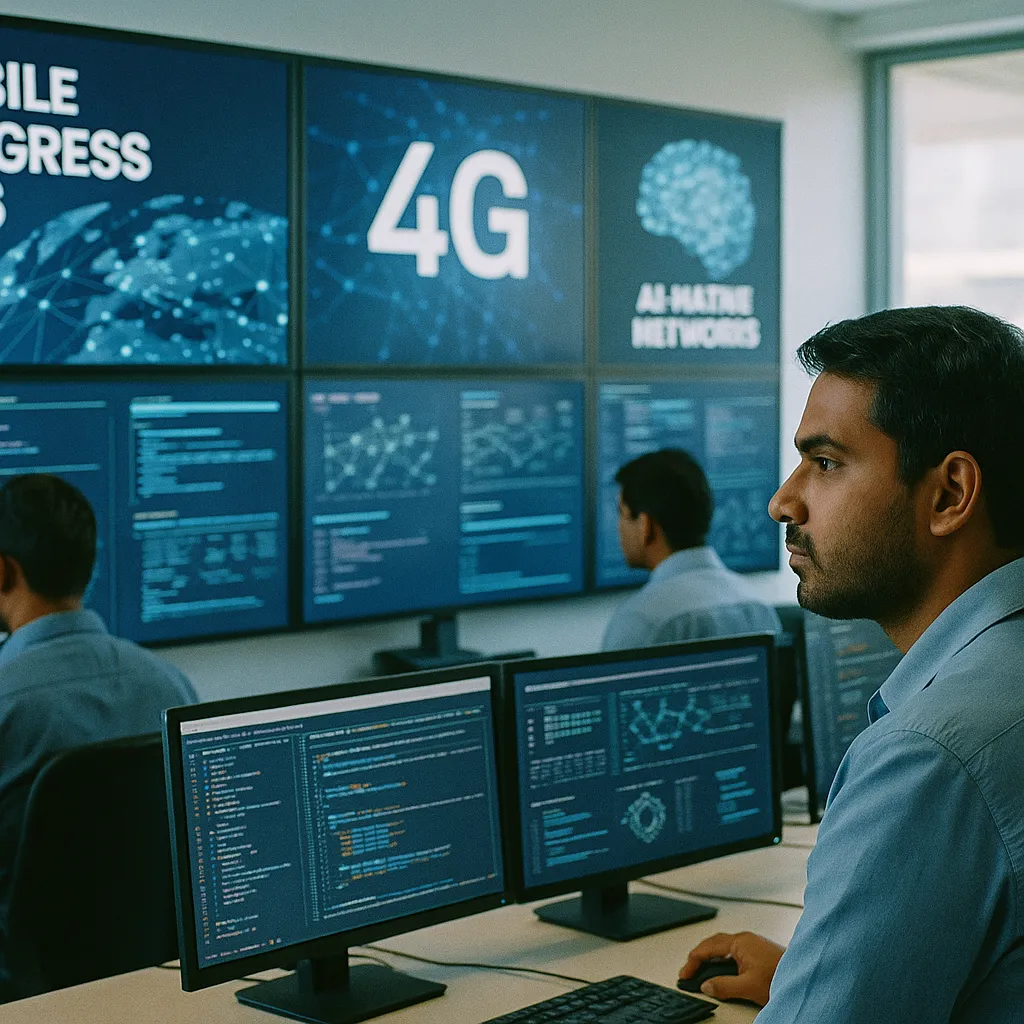
Three of the world's largest mobile carriers published results from live AI network optimization trials this week, and the numbers align: Deutsche Telekom achieved up to 65% lower 5G core energy consumption, KDDI reduced network optimization work time by [more than](/finance/majority-americans-ai-personal-finance-2026) 95%, and SoftBank improved spectral efficiency by approximately 10%. Results converging across three carriers operating on three continents validates AI-native network management as a commercial reality, not a roadmap item.
Why this matters at scale. Mobile networks operate where small efficiency improvements translate into large economic outcomes. Energy is one of the largest variable operating costs for any Tier 1 carrier — 5G base stations consume significantly more power per unit than their 4G predecessors, and carriers operate tens of thousands of them. Optimization work — the engineering labor required to continuously tune network performance — represents hundreds of thousands of engineer-hours annually. AI targeting both cost categories simultaneously is why these results command attention.
Deutsche Telekom's results. The German carrier achieved up to 65% reduction in 5G core energy consumption through AI-driven power management. This means the AI optimizes when and how hard each component of the 5G core network runs — adjusting in real time to traffic patterns rather than following fixed power configurations set during deployment. A 65% reduction on core energy costs, at Deutsche Telekom's network scale, represents a significant operating expense reduction.
KDDI's results. The Japanese carrier focused on operations efficiency: AI reduced the manual optimization work time required from network engineers by more than 95%. Tasks that previously required extensive engineering resources to configure and tune are now handled by AI systems. For a network the size of KDDI's, the engineering cost reduction is substantial, independent of any energy savings.
Get this in your inbox.
Daily AI intelligence. Free. No spam.
SoftBank's results. SoftBank's trial targeted radio performance: approximately 10% improvement in spectral efficiency (how much data is transmitted per unit of licensed spectrum) and a corresponding improvement in downlink throughput. A 10% spectral efficiency gain is equivalent to acquiring additional capacity from existing licensed spectrum — effectively obtaining the benefit of a new spectrum auction without the cost.
How AI network optimization works. Traditional networks run on static configurations: traffic routing, load balancing, and power management follow rules set by engineers and updated infrequently. AI-native management replaces static rules with models that continuously monitor traffic patterns, equipment performance, and environmental conditions to make real-time micro-adjustments:
- A tower registers low traffic at 3 a.m. — the AI reduces its power output
- Traffic spikes in one cell — load shifts automatically before congestion builds
- Interference patterns shift — antenna configurations adjust without engineer login
- Equipment telemetry shows early degradation — maintenance is flagged before failure
The cumulative effect of thousands of these adjustments across a live network produces the headline figures.
Beyond smartphones. All three carriers are extending the same AI layer to industrial IoT, connected robots, and enterprise private networks running on the same 5G infrastructure. As factories and logistics operations deploy more AI-connected equipment, traffic patterns become more variable and complex — exactly the conditions where real-time AI optimization outperforms static rule-based management by the widest margins.
The infrastructure implications. These results arrive as carriers are simultaneously trying to lower operating costs, justify 5G investment through new use cases, and position for 6G. AI-native network management addresses all three: it reduces opex, enables reliability guarantees that differentiate 5G commercially, and demonstrates the AI-infrastructure integration that 6G architectures are being designed around. Carriers that build AI competency into network operations now are building toward 6G on a stronger foundation.
What to watch. Whether these trial results translate into full-network AI deployments, and how the vendors supplying the optimization software — Ericsson, Nokia, and a set of specialist startups — compete for the contracts that follow.
Did this help you understand AI better?
Your feedback helps us write more useful content.
Get tomorrow's AI briefing
Join readers who start their day with NexChron. Free, daily, no spam.