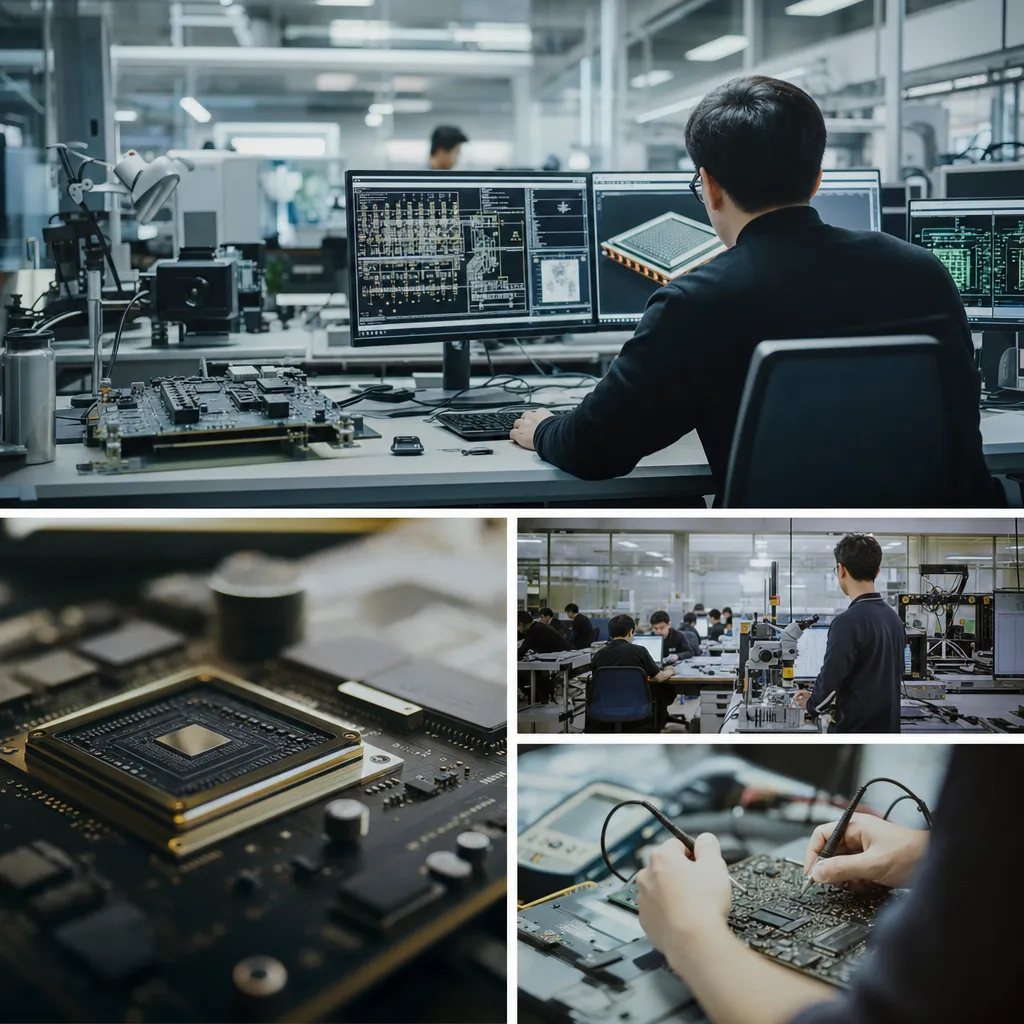
Two OpenAI engineers used GPT-6 and Astra to design a complete push-to-talk hardware device — PCB, firmware, enclosure, and UI — in under a week with minimal human edits.
Two OpenAI engineers used GPT-6 and the Astra multimodal agent to design a complete hardware device — PCB layout, components, enclosure, firmware, and UI — in under a week, with minimal direct human edits during the design phase. The demonstration is a proof point for AI's emerging role in end-to-end hardware engineering, a domain that has historically been resistant to software automation.
What They Built
According to Interesting Engineering, the two-person team used GPT-6 and Astra to design a push-to-talk Codex companion device — a small physical product intended to interact with OpenAI's Codex coding assistant. The AI handled:
- PCB (printed circuit board) layout — the physical routing of electronic components on the board
- Component selection — choosing specific chips, connectors, and passive components
- Enclosure design — the physical housing
- Firmware — the low-level software that runs on the device hardware
- UI — user interface logic
The timeline was under one week. Manufacturing revisions were still required after the initial AI-generated design — a normal part of hardware production that the team did not claim AI eliminated.
Get this in your inbox.
Daily AI intelligence. Free. No spam.
The Usage Signal
OpenAI reports a 23-fold increase in AI model usage across its internal hardware teams between February and October 2026. That figure covers eight months and suggests the company has been systematically integrating AI assistance into its own hardware development workflows, not just using it for demos.
The 23x figure is notable because it describes internal consumption — teams using AI to do their actual jobs — rather than external product usage metrics, which are easier to inflate with casual users.
Why Hardware Is Different
Software generation by AI — writing code, generating tests, drafting documentation — is now well-established. Hardware is harder for several reasons:
- Constraints are physical. A bad PCB trace isn't a syntax error; it can cause a board to fail in ways that are difficult to debug.
- Component availability is a real-world variable. Designs that use unavailable parts require redesign.
- Manufacturing tolerances matter. What's correct in simulation may not be manufacturable.
- Iteration cycles are slow. You can't run a PCB layout in a test environment.
The fact that the OpenAI team still needed manufacturing revisions acknowledges these constraints honestly. The claim is not that AI designed a perfect first-spin board — it's that AI compressed the design phase dramatically and allowed a two-person team to produce work that would typically require a larger cross-functional group.
What to Watch
The demonstration is early-stage, and the product involved — a companion device for an AI coding assistant — is a relatively contained hardware problem. The more significant test will be whether these workflows translate to more complex consumer hardware, medical devices, or industrial electronics where failure tolerance is lower. OpenAI has not announced a hardware product line, but the internal usage data and the public demonstration suggest the company is investing seriously in understanding what AI-assisted hardware design looks like at scale.
Did this help you understand AI better?
Your feedback helps us write more useful content.
Get tomorrow's AI briefing
Join readers who start their day with NexChron. Free, daily, no spam.