Four Chinese AI labs — Z.ai, MiniMax, Moonshot, and DeepSeek — released open-weight coding models matching Western frontier performance at one-third the inference cost in May 2026.
Four Chinese Labs Release Open-Weight Coding Models at One-Third the Cost of Western Frontier AI
By Hector Herrera | May 9, 2026 | News
Four Chinese AI labs released open-weight coding models in May 2026 that match Western frontier models on agentic engineering benchmarks at inference costs no higher than one-third of top-tier Western systems. The simultaneous releases from Z.ai, MiniMax, Moonshot, and DeepSeek signal that the capability gap between Chinese open-source AI and Western frontier models has closed substantially in the coding domain — with direct implications for enterprise AI procurement and the competitive dynamics between US and Chinese AI development.
What Happened
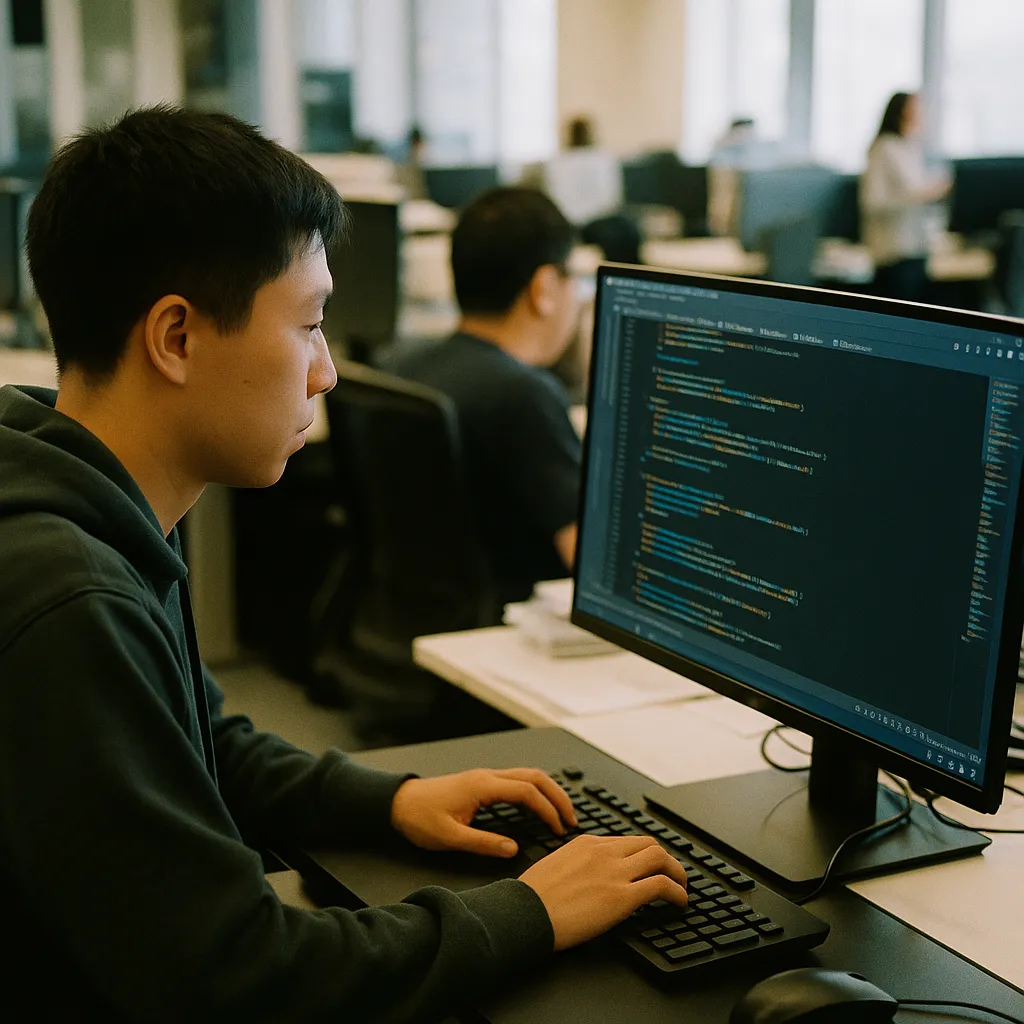
According to LLM Stats, Z.ai, MiniMax, Moonshot, and DeepSeek each released open-weight coding models in May 2026. The models were evaluated against Western frontier systems on agentic coding benchmarks — tests that measure an AI's ability to complete multi-step software engineering tasks autonomously, not just generate single code snippets — and achieved comparable results.
The inference cost differential is the second key number: running these Chinese open-weight models costs approximately one-third of what enterprises pay to access closed frontier systems like Claude Opus 4.7.
Open-weight models are AI systems whose parameters are publicly released, allowing companies to download and run them on their own infrastructure rather than paying for API access. This changes the cost structure, the compliance profile, and the vendor relationship for enterprise deployments.
The DeepSeek Pattern at Scale
This isn't the first Chinese open-weight model to challenge Western frontier performance. DeepSeek's R1 release in early 2026 demonstrated that Chinese labs could produce research-grade AI at substantially lower cost than the resource-intensive approaches favored by US labs. That single release triggered significant market reaction and prompted renewed discussion about the durability of Western AI's capability lead.
The May 2026 coordinated releases from four labs represents a step further. Rather than a single surprise entrant, the market now has four credible Chinese alternatives releasing in the same window — which suggests either deliberate coordination between labs or a maturation of Chinese AI development capacity that makes such releases routine rather than exceptional.
Get this in your inbox.
Daily AI intelligence. Free. No spam.
What Coding Parity Actually Means for Enterprise Buyers
The enterprise implications depend on what buyers care about most.
For cost-sensitive enterprise buyers, four open-weight models matching Western frontier performance at roughly one-third the inference cost changes the procurement math immediately. A company spending significant budget on AI coding API costs could, in theory, achieve comparable performance through self-hosted open-weight alternatives — assuming acceptable deployment, maintenance, and compliance overhead.
For compliance-sensitive buyers — US defense contractors, government agencies, financial institutions under data residency requirements, and companies in regulated industries — open-weight Chinese models present a different calculation. Supply chain risk, data security concerns, and geopolitical considerations create real barriers to adoption that pure cost analysis doesn't capture.
For Western AI labs, the competitive moat around coding capability has narrowed. The argument that Western frontier models offer capabilities unavailable elsewhere is harder to sustain in the coding domain specifically. This creates pricing pressure and may accelerate internal debates about whether Western labs need to release their own open-weight models to maintain relevance with developers who have cost-credible alternatives.
The Geopolitical Dimension
The coding domain is strategically significant because software engineering is foundational to AI development itself. AI systems capable of autonomously writing code can be used to develop and iterate on AI systems — a capability that compounds over time.
A Chinese open-source ecosystem that can produce coding AI at comparable capability and substantially lower cost creates a viable alternative to Western foundation model APIs for software developers globally. In markets outside the US and EU — particularly Southeast Asia, South Asia, and Africa — cost parity may translate directly to adoption. That adoption creates long-term dependencies on Chinese AI infrastructure and shapes what norms and defaults developers build with.
For policymakers tracking technology competition, this development represents a meaningful data point. The AI race is not simply a frontier capabilities race anymore — it is also a cost, accessibility, and distribution race, and Chinese open-source labs are currently competing effectively on all three dimensions in the coding domain.
What to Watch
How enterprise AI buyers respond to the cost differential in Q2 2026 procurement cycles, and whether Western labs announce pricing adjustments or new open-weight releases in response. Also watch how benchmark organizations evaluate these models — agentic coding benchmarks are the current standard, but they measure a specific slice of capability that may not capture real-world deployment differences.
Note: The primary source for benchmark and pricing data cited in this report is LLM Stats, an independent AI benchmarking site. Readers should verify specific performance claims against additional sources as competitive AI benchmarking results can vary significantly by methodology.
Did this help you understand AI better?
Your feedback helps us write more useful content.
Get tomorrow's AI briefing
Join readers who start their day with NexChron. Free, daily, no spam.