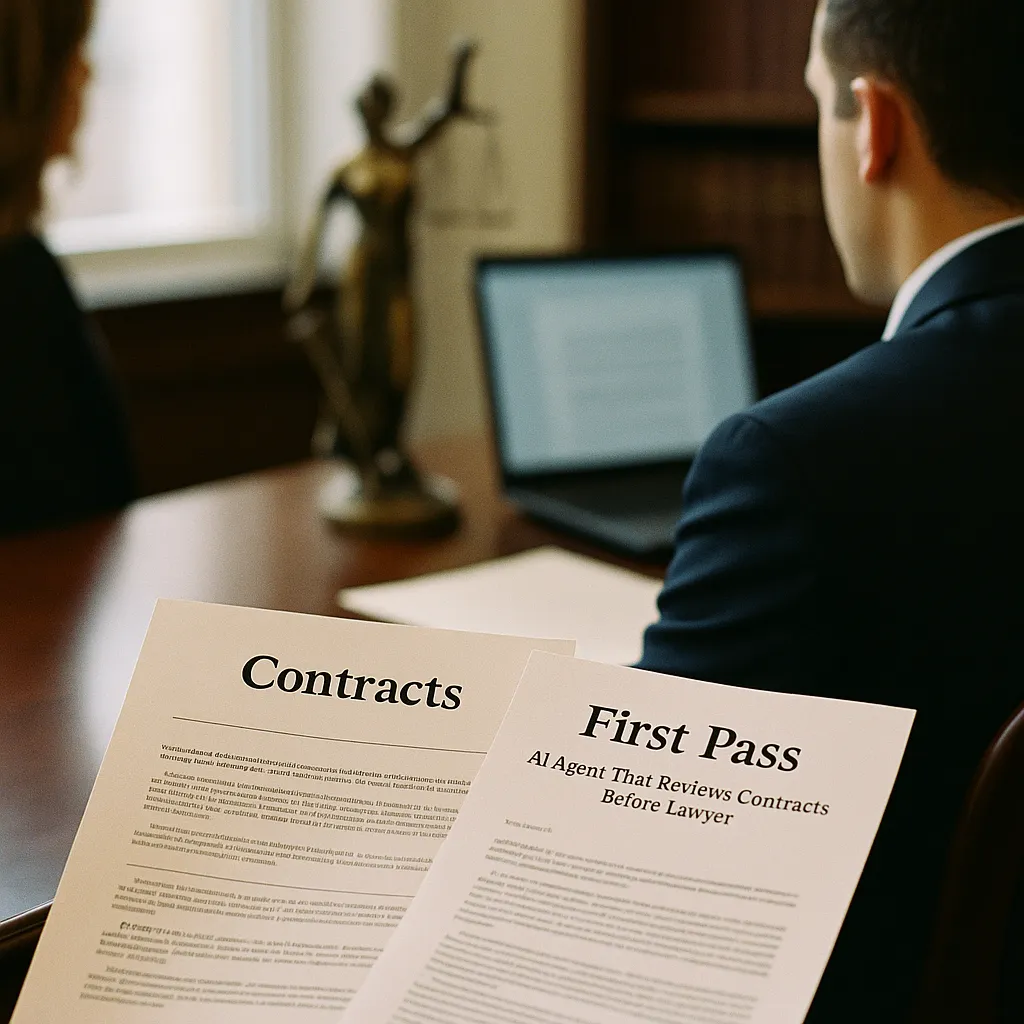
Courts are now detecting four to five AI-hallucinated legal citations in filings per day, with sanctions exceeding $100,000—and law firms are adding clauses warning clients about attorney-client privilege risks.
Courts Are Catching AI-Hallucinated Legal Citations at a Rate of Four to Five Cases Per Day
By Hector Herrera | April 25, 2026 | Legal · Vertical
Courts across the United States are now documenting four to five new cases per day in which attorneys submitted legal filings containing AI-generated citations to cases that do not exist — and the financial consequences are escalating, with sanctions and attorneys' fees in recent cases exceeding $100,000.
The problem is not new. AI "hallucination" in legal research — where a language model invents plausible-sounding but fictional case citations — has been documented since 2023. What is new is the detection rate and the dollar amounts attached to it.
How This Keeps Happening
According to Claims Journal, a recent ruling prompted fresh judicial warnings after another attorney submitted a brief citing cases that appeared in no legal database. The pattern is consistent across documented cases: an attorney or paralegal uses a general-purpose AI assistant (not a purpose-built legal research tool with citation verification) to draft or research a brief, the AI produces citations formatted exactly like real case law, and the citations pass a surface-level review before filing.
The core failure mode is a mismatch between how confident AI looks when it hallucinates and how wrong it actually is. A fictional case citation reads identically to a real one: same format, same jurisdiction style, same plausible-sounding parties and holding. Without actively searching for the case in Westlaw, Lexis, or a court database, there is no visual signal that anything is wrong.
Get this in your inbox.
Daily AI intelligence. Free. No spam.
Why the frequency is rising:
- AI writing tools are now embedded in more attorney workflows at every firm size
- Solo practitioners and small firms without dedicated legal research staff are especially exposed
- The speed advantage of AI drafting creates pressure to reduce review time
- Judges and opposing counsel are now actively checking citations — raising the detection rate, not necessarily the underlying incidence rate
The Privilege Problem
Beyond sanctions, law firms are responding to a second, less-publicized risk. Several firms are now adding explicit contract clauses warning clients that sharing legal advice with commercial AI chatbots may destroy attorney-client privilege.
The reasoning is straightforward: attorney-client privilege protects confidential communications between attorney and client. When a client pastes legal advice into a chatbot — or when an attorney uses a third-party AI tool that logs prompts — that communication is potentially shared with a third party, breaking the confidentiality required for privilege to attach. This is not a hypothetical. Courts have found privilege waived in analogous circumstances involving email forwarding and cloud storage with third-party access.
What Firms Are Doing About It
The responsible response to AI hallucination in legal research is not to avoid AI — it is to use the right tools with the right verification workflow. Purpose-built legal AI tools from companies like Lexis+, Thomson Reuters, and Harvey integrate citation verification at the generation step, flagging unverifiable citations before they reach a draft. General-purpose AI assistants — ChatGPT, Claude, Gemini — do not have this safeguard by default.
The workflow fix is simple in principle: never submit a citation you haven't independently verified in a primary legal database. In practice, it requires process discipline, especially under deadline pressure.
What to Watch
Expect judicial oversight to formalize further. Several federal districts have already adopted standing orders requiring attorneys to certify that AI-generated content has been verified. Expect those orders to spread as the case frequency continues. The American Bar Association's Professional Responsibility guidelines are also under review — expect a formal opinion on AI use in legal practice within the next 12 months.
For clients: if your firm hasn't disclosed its AI use policy to you, ask. The privilege question alone warrants a direct conversation.
Source: Claims Journal, April 16, 2026
Did this help you understand AI better?
Your feedback helps us write more useful content.
Get tomorrow's AI briefing
Join readers who start their day with NexChron. Free, daily, no spam.