The Defense Department has finalized AI supply contracts with OpenAI, Google, and Microsoft, codifying a multi-vendor procurement doctrine that explicitly excludes Anthropic and signals a structural shift in how the federal government buys AI.
Pentagon Formalizes Multi-Vendor AI Strategy With OpenAI, Google, and Microsoft
By Hector Herrera | June 16, 2026 | NexChron.com
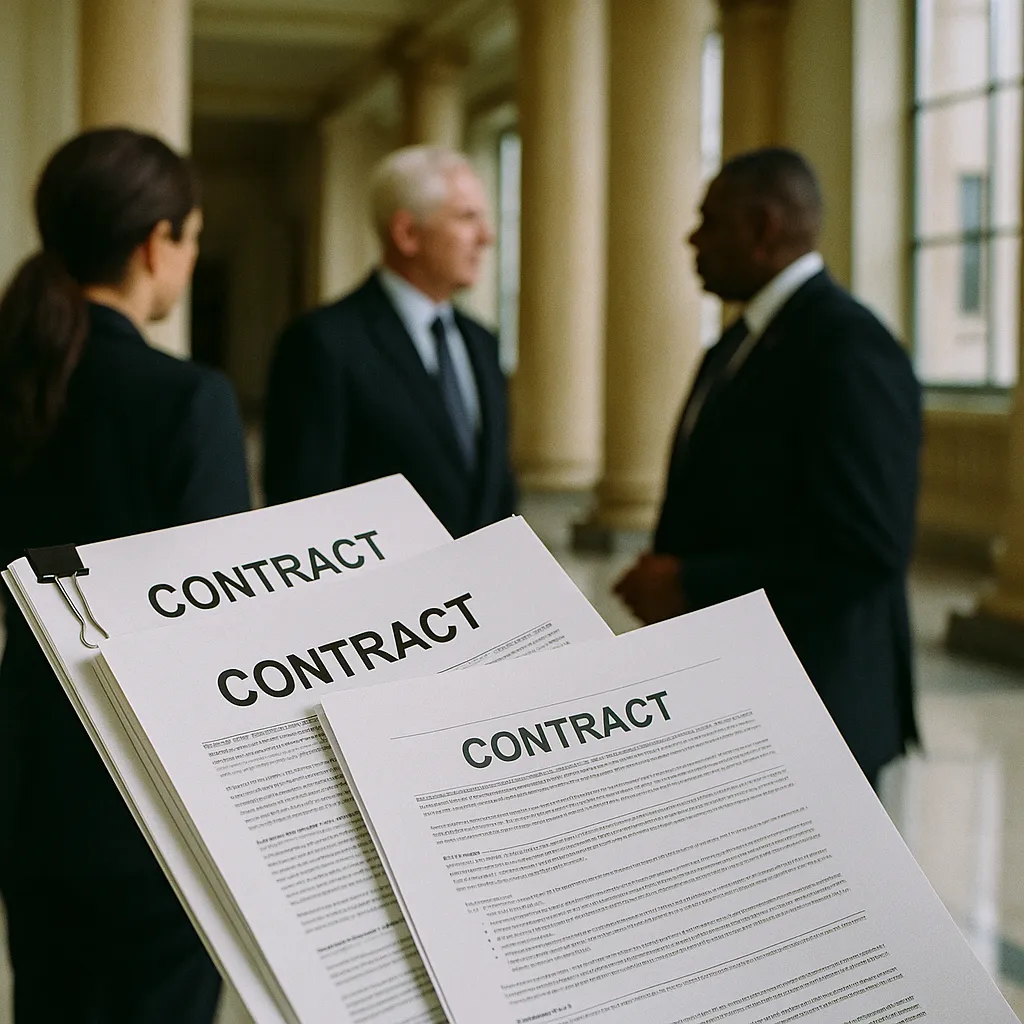
The U.S. Department of Defense has finalized AI supply contracts with OpenAI, Google, and Microsoft, locking in a deliberate multi-vendor procurement structure that simultaneously excludes Anthropic and signals a durable shift in how the federal government buys artificial intelligence. The move is less a one-time contract decision than a doctrine: the Pentagon is no longer willing to depend on any single AI lab.
The context: For much of 2024 and early 2025, federal AI procurement was ad hoc — agencies bought from whoever had the best available model for a specific task. What has changed is codification. The DoD's March 2026 supply-chain-risk designation against Anthropic and the subsequent formalization of OpenAI, Google, and Microsoft as primary AI vendors reflects a deliberate decision to build redundancy into the government's AI foundation rather than allow a single provider to become critical infrastructure.
The Vendor Structure
According to reporting on the finalized contracts, the DoD has now established active supply agreements with:
- OpenAI — covering language model capabilities for a range of classified and unclassified use cases
- Google — providing Gemini-family models and Google Cloud AI infrastructure
- Microsoft — supplying Azure AI services, Copilot for government, and Microsoft's embedded OpenAI integration
The three vendors cover overlapping capabilities, which is intentional. The Pentagon's explicit goal is vendor redundancy — ensuring that a security concern, corporate failure, or pricing dispute with any single provider does not disrupt AI-dependent military and intelligence operations.
Why the Anthropic Exclusion Is Structural, Not Incidental
The designation of Anthropic as a supply-chain risk in March was not a competitive procurement loss. It was a legal classification that prevents DoD agencies and their contractors from entering into procurement relationships with the company. Anthropic is challenging the designation in federal court, but the formalization of the three-vendor framework with its competitors suggests the government is building a procurement architecture that does not require Anthropic's reinstatement.
Get this in your inbox.
Daily AI intelligence. Free. No spam.
This matters beyond the immediate financial impact — which Anthropic's CFO has quantified as potentially billions of dollars in 2026 revenue at risk. The structural exclusion means:
- Defense contractors building AI-enabled systems for the Pentagon will default to the approved vendor list, accelerating OpenAI, Google, and Microsoft's penetration into the broader defense ecosystem
- Clearance and compliance certification processes will be built around the approved three, creating switching costs that persist even if the Anthropic designation is eventually reversed
- The DoD's vendor list functions as an informal enterprise trust signal: government approval at this level influences procurement decisions at regulated industries far beyond the military
What the Multi-Vendor Doctrine Means
The shift from opportunistic to deliberate multi-vendor AI procurement has implications that extend well beyond Anthropic's situation.
For national security: Vendor redundancy in critical AI infrastructure mirrors the logic the government has applied to semiconductors and cloud computing — you don't want a single point of failure in systems that U.S. forces depend on. AI models supporting logistics, intelligence analysis, and communications infrastructure are now treated the same way.
For AI market structure: Federal contracts are large, long-term, and publicly visible. Being on the DoD approved vendor list creates a credibility floor for enterprise sales that is difficult to replicate through commercial means alone. The three companies that made the list have a structural advantage in selling AI to the full range of government-adjacent industries — healthcare systems that serve veterans, infrastructure companies with federal contracts, and financial institutions subject to federal oversight.
For Anthropic: The company has positioned itself as the safety-first alternative to OpenAI. That positioning, which resonates strongly in commercial markets, appears to have created friction in a federal procurement context where safety-first can translate into additional due diligence burdens. Whether the designation reflects a substantive security concern or a procedural disagreement remains contested in litigation — but the market impact is already compounding.
The Broader AI Governance Signal
The Pentagon's codified multi-vendor approach is part of a wider pattern of federal AI governance becoming more deliberate and more consequential. Earlier this year, the White House moved to pre-empt state-level AI regulations, while CISA and NSA published joint guidance on agentic AI for enterprise environments. Together, these moves sketch the contours of a federal AI governance posture: standardized access, controlled vendors, and explicit risk designation authority.
The Pentagon is not just a large AI customer. It is increasingly a standard-setter for how AI is procured, governed, and risk-classified across the U.S. government and the industries that serve it.
What to Watch
The federal court ruling on Anthropic's preliminary injunction — expected within weeks — will determine whether the company can re-enter the procurement conversation while the supply-chain designation is litigated. Even if the injunction succeeds, the DoD's formalization of its three-vendor framework suggests that reinstatement would require not just a legal win but an active re-qualification process. Watch for whether Anthropic pursues commercial diversification aggressively in the meantime, or signals confidence that litigation will restore its federal standing.
Sources: CryptoBriefing | Seeking Alpha — Anthropic revenue filing
Did this help you understand AI better?
Your feedback helps us write more useful content.
Get tomorrow's AI briefing
Join readers who start their day with NexChron. Free, daily, no spam.