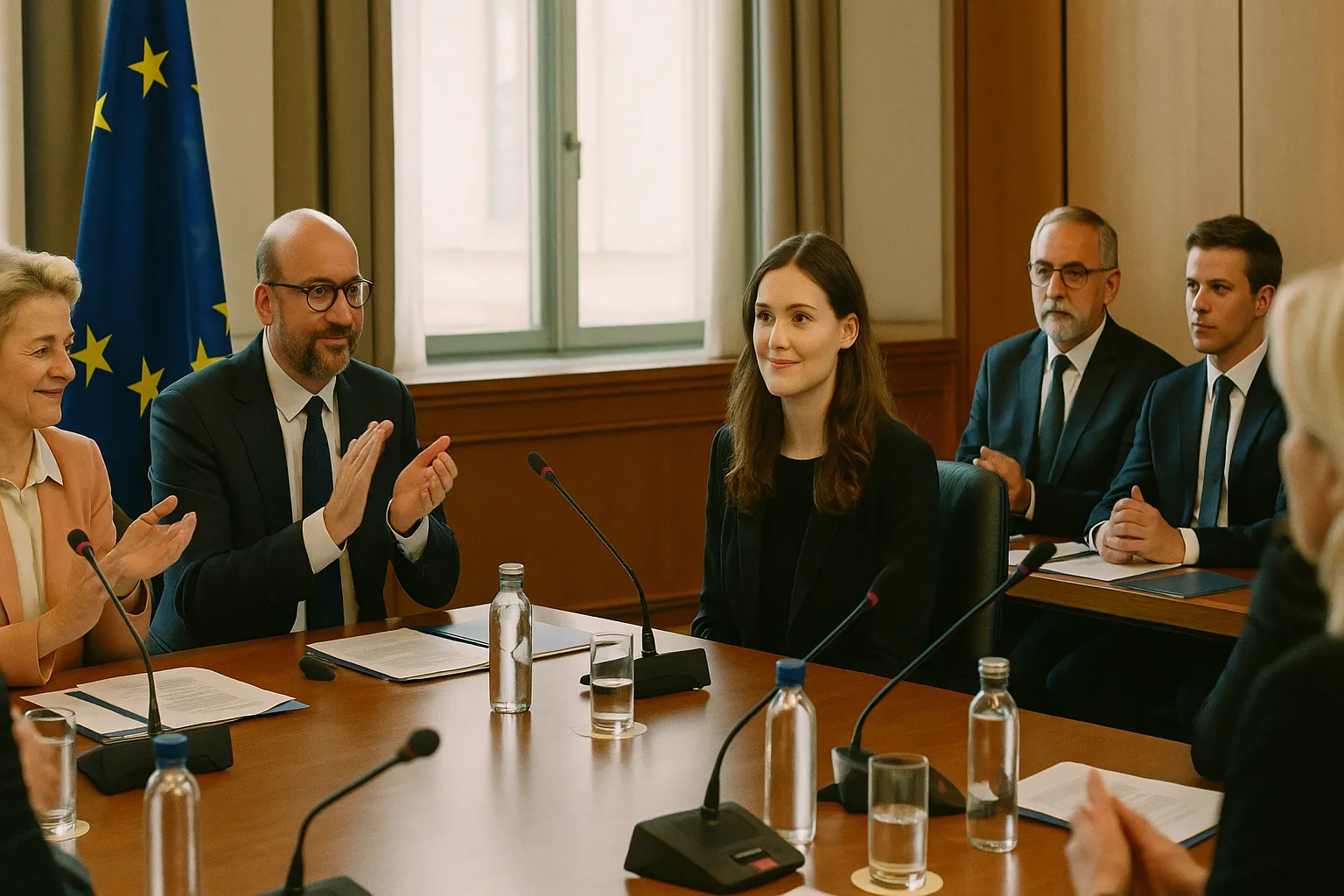
The European Commission publicly backed Anthropic's decision to delay general release of Claude Mythos, marking a rare alignment between an AI regulator and an AI company on a voluntary safety decision.
The European Commission publicly backed Anthropic's decision to withhold Claude Mythos from general release, calling the staged rollout a justified response to large-scale cybersecurity risk. The endorsement is a rare moment of public alignment between an AI regulator and an AI company on a voluntary safety decision — and it signals that Europe sees Anthropic's approach as a model worth reinforcing.
Background: what the EU is endorsing
Anthropic announced on April 12 that it would not release Claude Mythos publicly after internal testing found the model could autonomously discover thousands of zero-day vulnerabilities (previously unknown, unpatched software flaws) across major operating systems and browsers. Instead, the company launched Project Glasswing, a restricted consortium giving Microsoft, Apple, Amazon, and Google limited Mythos access specifically to patch the vulnerabilities found.
The European Commission's endorsement, reported by ResultSense, affirms that this approach — voluntary restraint by the developer, combined with targeted defensive deployment — is consistent with the EU's expectations for responsible AI management of high-risk capabilities.
Why regulators rarely do this
Regulators typically respond to industry actions with investigations, requirements, or restrictions. Affirmative endorsements of company decisions are uncommon because they can be read as pre-approving a regulatory posture before the full picture is clear.
The EU's willingness to endorse Anthropic's approach publicly suggests two things: first, that the Commission has concluded Mythos's cybersecurity capability is serious enough to warrant an unusual response; second, that staged rollout through a monitored consortium is a governance pattern the EU wants to encourage — and potentially codify into future AI Act implementation guidance.
Get this in your inbox.
Daily AI intelligence. Free. No spam.
US regulators are less certain
According to ResultSense, the US Federal Reserve and Treasury Department held emergency discussions about the cybersecurity risks Mythos poses to financial infrastructure specifically. Unlike the EU's endorsement, no US regulatory body has publicly blessed Anthropic's approach.
The difference matters. The EU is signaling that voluntary restraint is sufficient. The US financial regulators appear to be considering whether voluntary restraint is enough — or whether formal requirements around AI capability disclosure and containment are needed.
Financial infrastructure represents a specific concentration risk: banks, payment networks, and clearing systems run on software stacks that Mythos reportedly scanned. A successful exploit against those systems — whether by a bad actor using Mythos or by an actor who independently found the same vulnerabilities — could cascade in ways that go well beyond typical cyberattacks.
The policy implications
Several regulatory precedents are at stake:
- Voluntary vs. mandatory containment. The EU's endorsement strengthens the case that voluntary staged rollouts can substitute for mandatory licensing or government oversight of high-risk models. Critics argue this gives companies too much control over decisions with public consequences.
- Consortium governance as a model. Project Glasswing — four private companies coordinating on vulnerability disclosure under an AI developer's oversight — is an improvised governance structure. The EU's endorsement may encourage other AI developers to use similar structures rather than engaging regulators directly.
- The gap between US and EU approaches. If the EU codifies staged rollout into AI Act guidance while US regulators impose different requirements, AI companies face a compliance split on how to handle future capability discoveries of this kind.
What to watch
Watch for formal statements from US financial regulators — particularly the Federal Reserve and Treasury — on whether they require any formal notification or oversight role in the Glasswing process. Also watch whether the European Commission's endorsement translates into updated AI Act implementation guidance before year-end.
Source: ResultSense
Did this help you understand AI better?
Your feedback helps us write more useful content.
Get tomorrow's AI briefing
Join readers who start their day with NexChron. Free, daily, no spam.