New York City and Los Angeles have imposed AI moratoriums through 8th grade as the 2026–27 school year opens, while Chicago school board candidates push for the same — drawing a sharp divide between urban districts restricting AI and those making it a graduation requirement.
AI Restrictions Widening as School Year Opens: Chicago Eyes Moratorium, NYC and LA Already Banning Through 8th Grade
By Hector Herrera | September 18, 2026 | Education
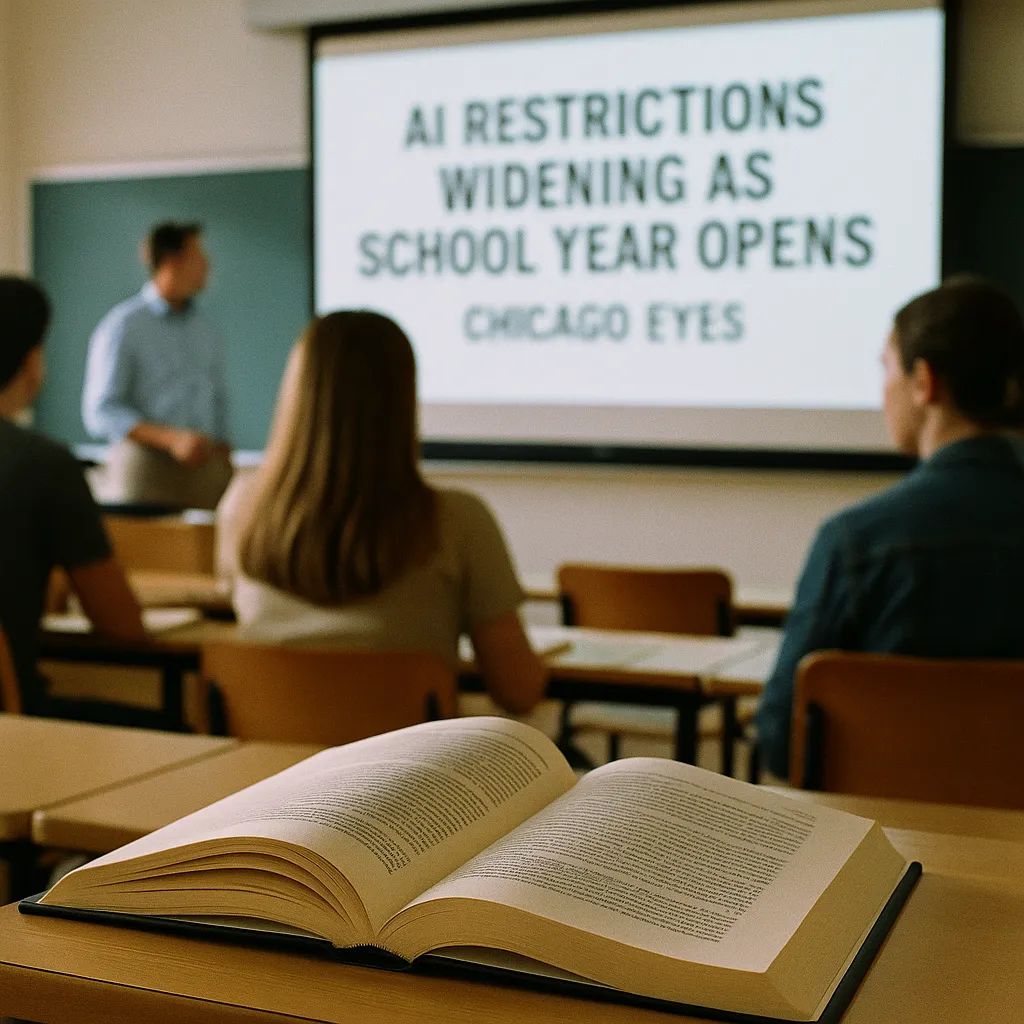
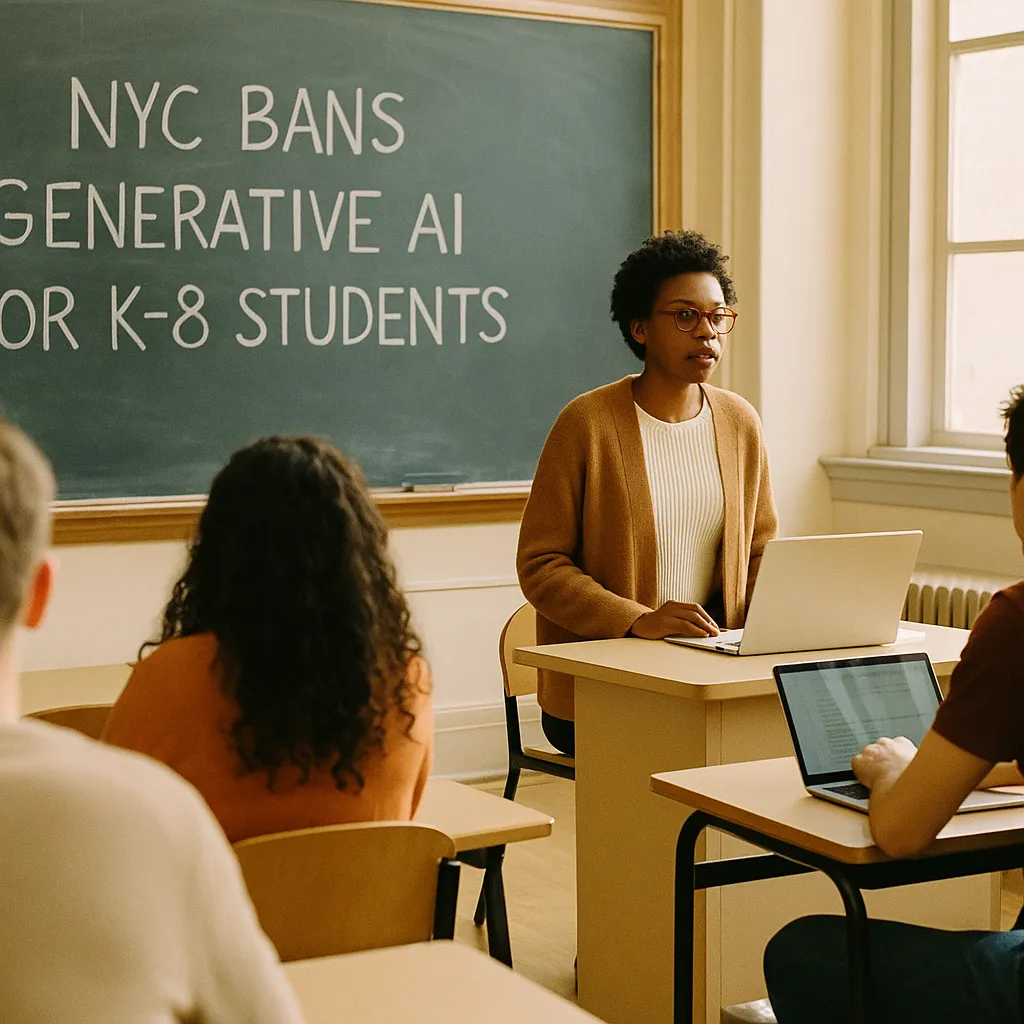
A growing bloc of large urban school districts is restricting student AI use as the 2026–27 school year opens. New York City and Los Angeles — the nation's two largest school districts — have each imposed moratoriums on student AI use through 8th grade. Chicago, the third-largest district, now has school board candidates actively pushing for a similar ban. The wave marks a clear reversal from earlier adoption phases and draws a sharp policy divide between urban districts restricting AI and other systems moving to make AI literacy a graduation requirement.
The shift matters because these three cities collectively enroll more than 1.5 million K-12 students. Restrictions here don't just affect those students — they signal to the national education market, textbook publishers, edtech vendors, and teacher training programs what urban school systems will and will not support.
Where Each City Stands
New York City imposed a moratorium on student generative AI use through 8th grade, covering tools including ChatGPT and Claude. The restriction applies to school-provided devices and school networks.
Los Angeles Unified School District adopted a parallel moratorium covering the same grade bands, with concerns centered on learning outcomes and student data privacy.
Chicago Public Schools, the third-largest US district, has not yet imposed a moratorium — but school board candidates in the current election cycle are campaigning on the issue, raising the likelihood of a formal restriction vote in the coming months.
The three cities represent different stages of the same pressure: from active campaigning, to formal policy adoption, to live enforcement.
Get this in your inbox.
Daily AI intelligence. Free. No spam.
What's Driving the Restrictions
Three concerns appear consistently in the reasoning behind the moratoriums:
-
Learning outcomes — administrators cite research and educator feedback suggesting that generative AI shortcuts the cognitive work involved in writing, problem-solving, and reading comprehension in younger students, where foundational skill-building is most critical.
-
Screen time — districts already under pressure from parent groups and pediatric health advocates to reduce device time are reluctant to add another category of AI-driven screen engagement for elementary and middle-school students.
-
Student data privacy — generative AI tools raise questions about what student input data is retained, used for training, or shared with third parties. Districts operating under FERPA (the federal student privacy law) face compliance exposure if AI vendors' data practices don't align with their obligations.
The Policy Split Is Sharpening
The contrast with other districts is stark. Boston Public Schools announced in 2026 that it would make AI literacy a graduation requirement beginning this school year — positioning AI fluency as a skill students must demonstrate, not a tool they must avoid. Katy ISD in Texas adopted a tiered approach earlier this year, banning AI for grades K-6 while allowing supervised use in high school.
The gap between districts that restrict AI and those that integrate it creates an equity concern that researchers and policy advocates are beginning to raise directly. Students in cities with moratoriums — who skew lower-income and higher-diversity by urban district demographics — may graduate without AI fluency at a moment when the job market increasingly assumes it. Students in districts with AI integration programs arrive in the workforce with documented AI skills.
This is not hypothetical. LinkedIn data from 2026 shows AI skills in [job postings](/work/entry-level-jobs-ai-collapse-career-ladder) have grown 297 percent year-over-year, with demand concentrated at the entry-level precisely where AI-limiting education policies have the most downstream effect.
What to Watch
Chicago's school board elections are the near-term signal. If the AI-moratorium candidates win and a formal ban passes, the three largest US urban school districts will have aligned on restriction — creating a critical mass that other large urban systems may follow.
The longer-term question is whether the moratoriums hold or reverse. New York City previously banned ChatGPT on school devices in January 2023, then reversed that ban in May 2023 as the policy was deemed unworkable. The current moratoriums are more deliberate and politically reinforced — but the history of K-12 technology bans suggests enforcement challenges grow as devices and AI access become ubiquitous outside school walls.
Source: American Greatness, September 11, 2026
Did this help you understand AI better?
Your feedback helps us write more useful content.
Get tomorrow's AI briefing
Join readers who start their day with NexChron. Free, daily, no spam.